Quick Answer & Synopsis: Hotels do not necessarily need to standardize on a single hospitality TV manufacturer throughout a property. Modern hotel TV systems can often support mixed environments that include Samsung, LG, and Philips hospitality televisions, provided proper planning, compatibility considerations, and system integration practices are followed. This flexibility can help hotels manage renovations, phased upgrades, and budget requirements more effectively.
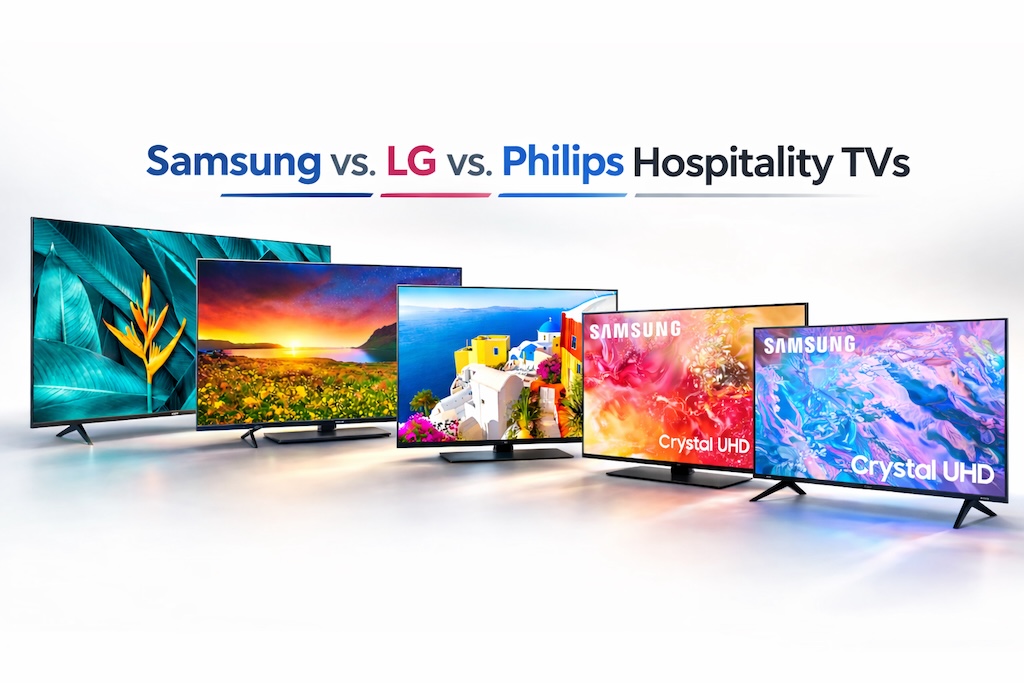
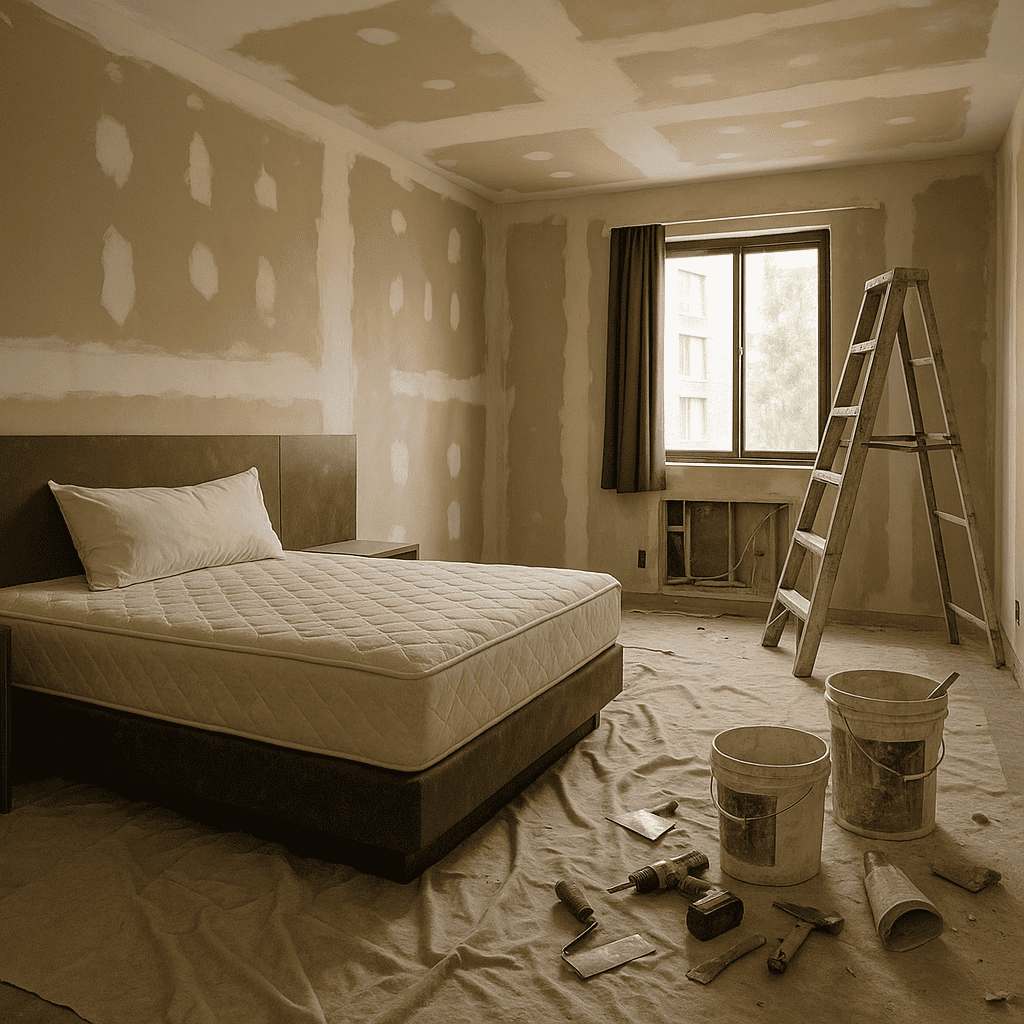
Hotels rarely replace every television in a property at the same time. Technology upgrades generally occur in phases. One floor gets renovated this year. Another building gets refreshed the following quarter. A few broken in-room TVs get swapped out between occupancy peaks. Before long, many hotels find themselves operating a mixed TV environment with a combination of Samsung, LG, and Philips hospitality televisions across the property.
The good news? Tech upgrades done in pieces are no longer a problem.
Modern hospitality TV deployments are far more flexible than they were a few years ago, and hotels can now mix Samsung, LG, and Philips TVs without creating operational challenges for engineering teams, housekeeping, or guests. With the right universal remote strategy, the transition becomes seamless.
For hotels trying to maintain consistency while controlling costs, a mixed TV environment is actually an advantage instead of a complication.
Why Hotels End Up with Mixed TV Brands
Most hotel operators are not intentionally trying to build a multi-brand TV ecosystem. It usually happens organically.
A few LG units fail and Samsung replacements are available faster. A renovation project may standardize on Philips TVs while legacy rooms still operate older models. Supply chain timing, brand standards, budget cycles, and availability all influence purchasing decisions. In some cases, hotels inherit different TV brands through acquisitions or management transitions.
The key takeaway is simple: hotels do not need to replace every functioning TV just to maintain uniformity.
That is especially relevant today, as hospitality TV standards continue evolving toward larger displays, 4K resolution, casting capabilities, and centralized control systems. Full property replacements can quickly become cost-prohibitive.
Instead of treating mixed environments as a temporary inconvenience, many properties now embrace them as a practical, long-term operating model.
The Biggest Concern: Remote Control Consistency
When hotels mix TV brands, the challenge is rarely the television itself. It is the remote control.
Different remotes create confusion for guests and inefficiencies for staff. Button layouts vary. Input controls behave differently. Housekeeping teams must recognize multiple remotes across rooms. Engineering teams must support different configurations.
That is where a universal hospitality remote becomes critical.
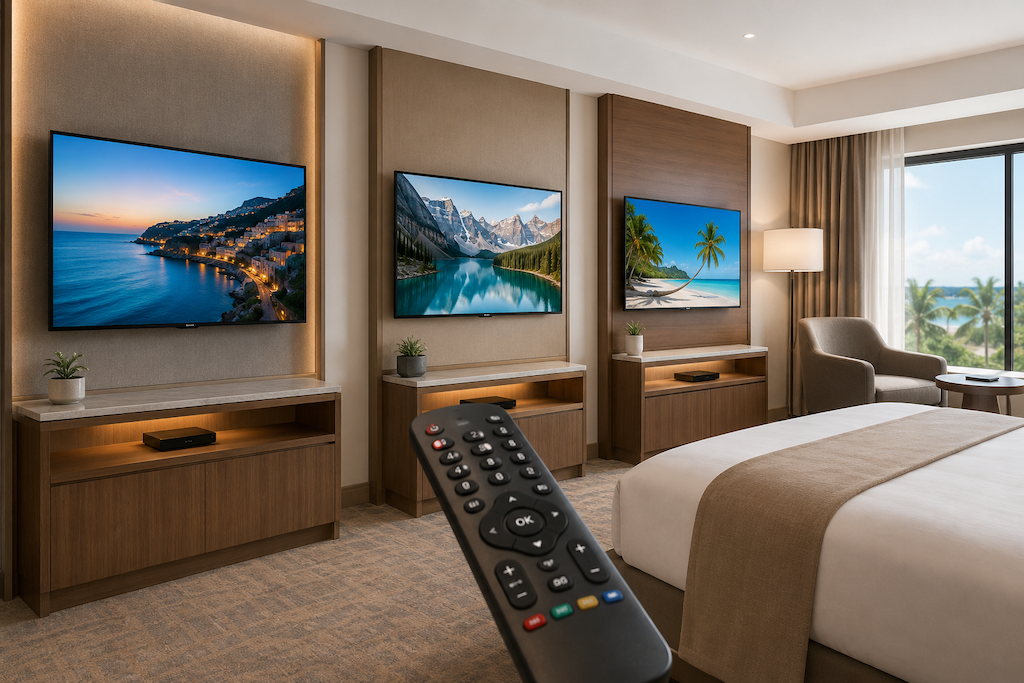
The Clean Remote SCR10 is designed specifically to simplify mixed TV environments. Instead of maintaining separate remotes for Samsung, LG, and Philips TVs, hotels can standardize on a single remote across the entire property.
This creates immediate operational benefits:
One consistent remote experience for guests
Simplified training for housekeeping and staff
Reduced inventory complexity
Faster room turnovers
Easier maintenance and troubleshooting
Most importantly, hotels gain the flexibility to replace a broken LG hospitality TV with a Samsung or Philips model, or any combination, without impacting the guest experience.
Replacing Broken TVs Should Not Trigger a Full Upgrade
One of the biggest misconceptions in hospitality technology is that TV ecosystems must remain perfectly brand-aligned.
In reality, waiting for exact replacement inventory can take rooms out of service unnecessarily. That impacts revenue, especially during high occupancy periods.
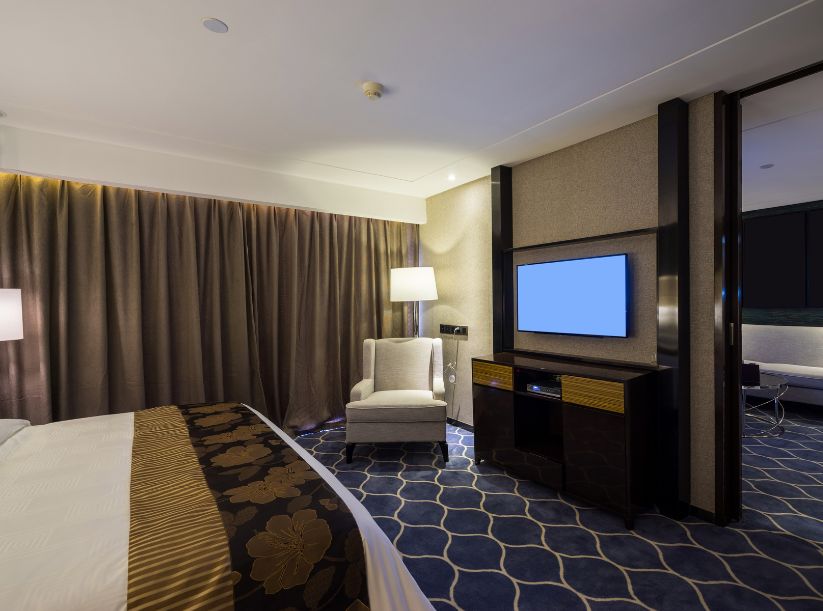
With a mixed TV strategy, engineering teams can replace failed televisions with available Samsung, LG, or Philips inventory and keep rooms operational.
This flexibility is especially valuable during:
The goal is not strict hardware uniformity. The goal is a consistent, reliable guest experience.
And from a guest perspective, consistency is defined by usability, not the brand behind the screen.
Hospitality Technology Is Moving Toward Flexibility
The hospitality industry is shifting toward more adaptable in-room technology ecosystems. Modern Samsung, LG, and Philips hospitality TVs all support advanced features such as smart interfaces, casting integrations, and centralized management systems.
This convergence means hotels are no longer locked into a single manufacturer to maintain a cohesive experience.
Instead, properties can prioritize:
A mixed TV environment aligns directly with these priorities.
How to Program the Clean Remote SCR10 to Any TV
One of the key advantages of the Clean Remote SCR10 is its ability to work across Samsung, LG, and Philips hospitality TVs with minimal setup.
While exact codes may vary by model, the programming process is straightforward and consistent.
Basic SCR10 Programming Instructions
Turn on the television manually.
Point the SCR10 remote directly at the TV.
Press and hold the SETUP button until the indicator light stays on.
Enter the programming code for the TV brand (Samsung, LG, or Philips).
Press the POWER button to test the connection.
If the TV responds correctly, the setup is complete.
If not, repeat the process using the next available code.
Recommended Workflow for Hotel Teams
For multi-room deployments, engineering teams typically:
Program remotes during TV installation
Keep a list of working codes for each brand (Samsung, LG, Philips)
Pre-program spare remotes for quick swaps
Standardize TV settings across all rooms regardless of brand
This ensures that even in a mixed environment, the guest experience remains consistent from room to room.
Why Universal Remotes Matter More Than Ever
Guests expect TVs to work instantly. They do not care whether the room is equipped with a Samsung hospitality TV, an LG, or a Philips display. They expect the same simple experience every time they press power, adjust volume, or change inputs.
A universal remote delivers that consistency.
At the same time, engineering teams benefit from reduced complexity behind the scenes. Supporting one remote platform instead of multiple manufacturer remotes leads to fewer service calls, faster issue resolution, and simplified inventory management.
Hotels no longer need to treat television replacements as an all-or-nothing decision.
For example, a broken LG TV can be replaced with a Samsung or Philips model. A Samsung TV can be swapped with LG or Philips inventory. The guest experience remains unchanged when a universal remote strategy is in place.
That flexibility allows hotels to reduce downtime, control costs, and simplify operations, all while maintaining a consistent in-room experience. A mixed TV environment is not a compromise. With the right tools, it is a smarter way to operate.
Questions About Hospitality TVs or Hospitality Tech Products?
If you have any additional questions about the different hotel technology brand standards, particularly with hospitality TVs, feel free to reach out to our hotel tech experts directly.