Quick Answer & Synopsis: Selecting the right packaged terminal air conditioner (PTAC) is an important investment for hospitality properties seeking dependable year-round climate control. This article introduces the Hotpoint PTAC product line, explains its key features and benefits, and explores why these commercial-grade systems are well suited for hotels and other multi-room properties requiring reliable performance and long-term value.
A Brief History About Hotpoint
Hotpoint started in 1903, and gets its name after the heating element convergence found on the tip of its electric iron. The originally invented design is for users to easily navigate buttonholes, ruffles, and pleats. Soon after its inception, the company merged with General Electric, in 1918, to become the Hotpoint brand of appliances. Over the past century, Hotpoint led the appliance industry with a series of new inventions and innovations for consumers to enjoy.
Today, Hotpoint is an industry leader, as it continues to build on its extensive history of delivering long-lasting, high-performing appliances.
The appliances they make are for both personal and commercial use, all at an affordable price. Many hoteliers trust Hotpoint as their go-to brand for packaged terminal air conditioners (PTACs), because they know each unit is designed with guest comfort and satisfaction in mind.
Hotpoint PTACs Explained in Detail
Hotel heating and cooling systems have a direct impact on the guest experience. A comfortable guestroom can help visitors sleep better, enjoy their stay, and form a more positive impression of a property. At the same time, hotel owners and operators need HVAC equipment that is dependable, straightforward to maintain, and cost-effective across dozens, or even hundreds, of guestrooms.
Hotpoint packaged terminal air conditioners provide a practical approach to individual room climate control. Designed with straightforward operation, dependable performance, and accessible pricing in mind, Hotpoint PTAC units offer hotels and other hospitality properties an effective solution for guestroom heating and cooling.
Available in multiple cooling capacities and configurations, Hotpoint PTACs are designed to accommodate different room sizes, electrical requirements, climates, and property needs. Features such as intuitive guest controls, temperature limiting, remote thermostat compatibility, self-diagnostics, and removable filters also help support efficient hotel operations.
For hospitality businesses searching for reliable PTAC units without unnecessary complexity, Hotpoint offers a balance of guest comfort, operational convenience, and long-term value.
What Is a Hotpoint PTAC?
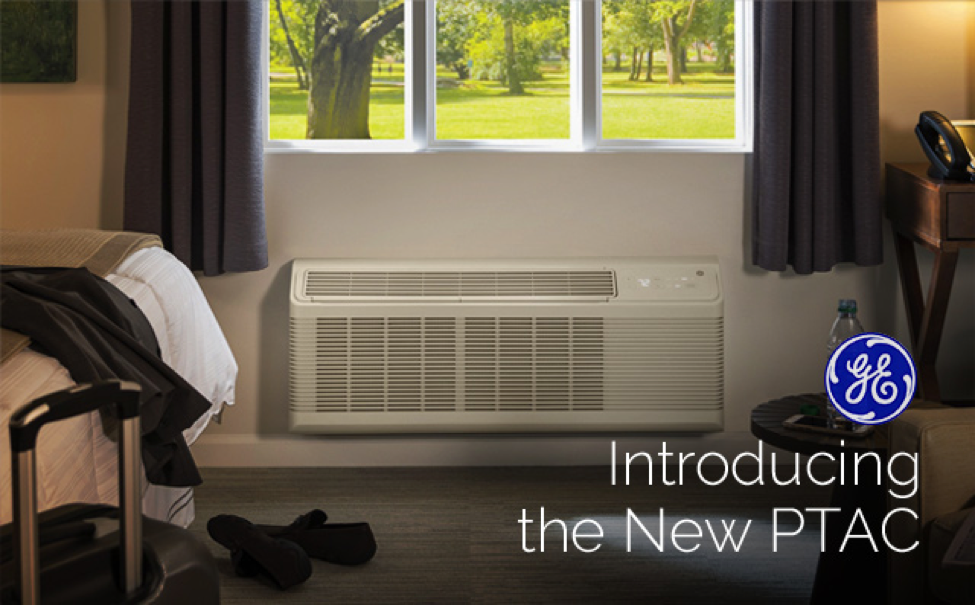
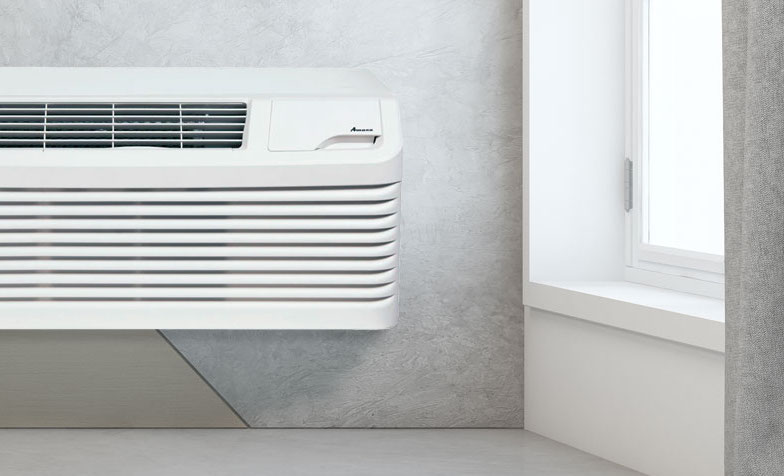
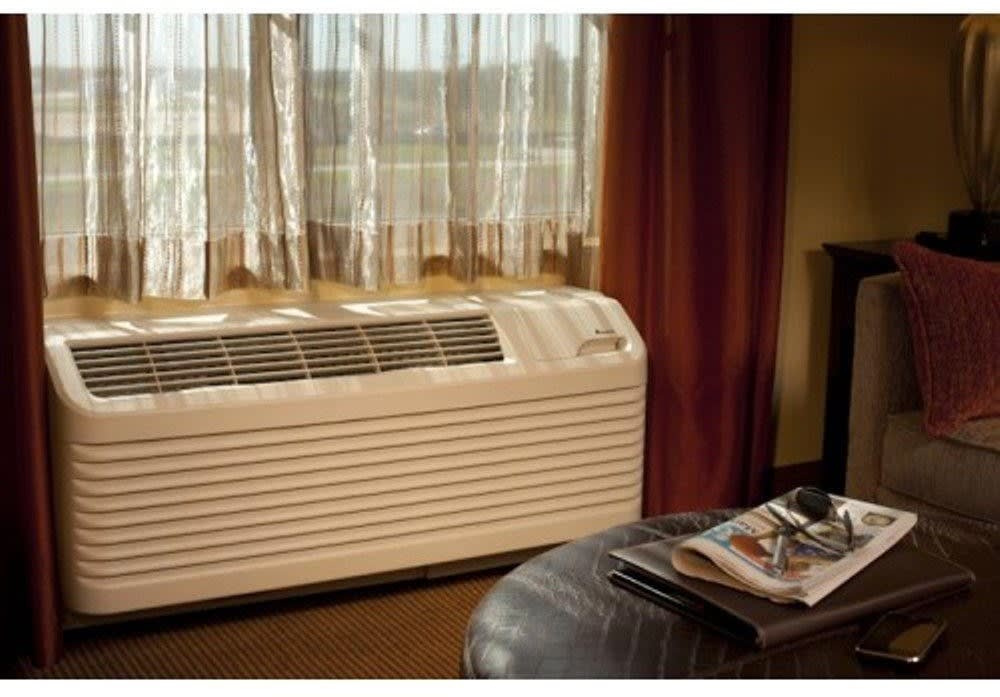
A Hotpoint PTAC is a self-contained heating and cooling system designed for through-the-wall installation. Each unit independently controls the temperature of an individual guestroom or designated space.
Unlike centralized HVAC systems, PTAC units allow hotels to manage climate control on a room-by-room basis. Guests can adjust the temperature according to their preferences, while hotel operators can establish temperature parameters and connect compatible controls to support property-wide energy-management strategies.
PTAC systems are commonly installed in hotels, motels, extended-stay properties, student housing facilities, senior living communities, multifamily buildings, and other commercial environments.
Hotpoint PTAC models are available with electric resistance heat or heat pump configurations. The appropriate system depends on factors such as the property’s climate, heating requirements, electrical infrastructure, room size, and operational priorities.
Why Hotels Choose Hotpoint PTAC Units
Hotel HVAC equipment must serve two audiences simultaneously. Guests expect a comfortable room and simple controls, while hotel teams need equipment that can be installed, serviced, and managed efficiently.
Hotpoint PTAC units address both sides of this equation. Their controls are designed to be accessible to guests, while built-in diagnostic and maintenance features can help engineering teams identify service requirements and maintain units more efficiently.
Hotpoint is also recognized for providing practical appliances and climate-control solutions at accessible price points. For hotel owners balancing renovation costs, replacement schedules, operating expenses, and guest expectations, this value-oriented approach can make Hotpoint PTACs an attractive option.
The objective is straightforward: provide dependable room comfort without introducing unnecessary operational complexity.
Intuitive Climate Controls for Hotel Guests
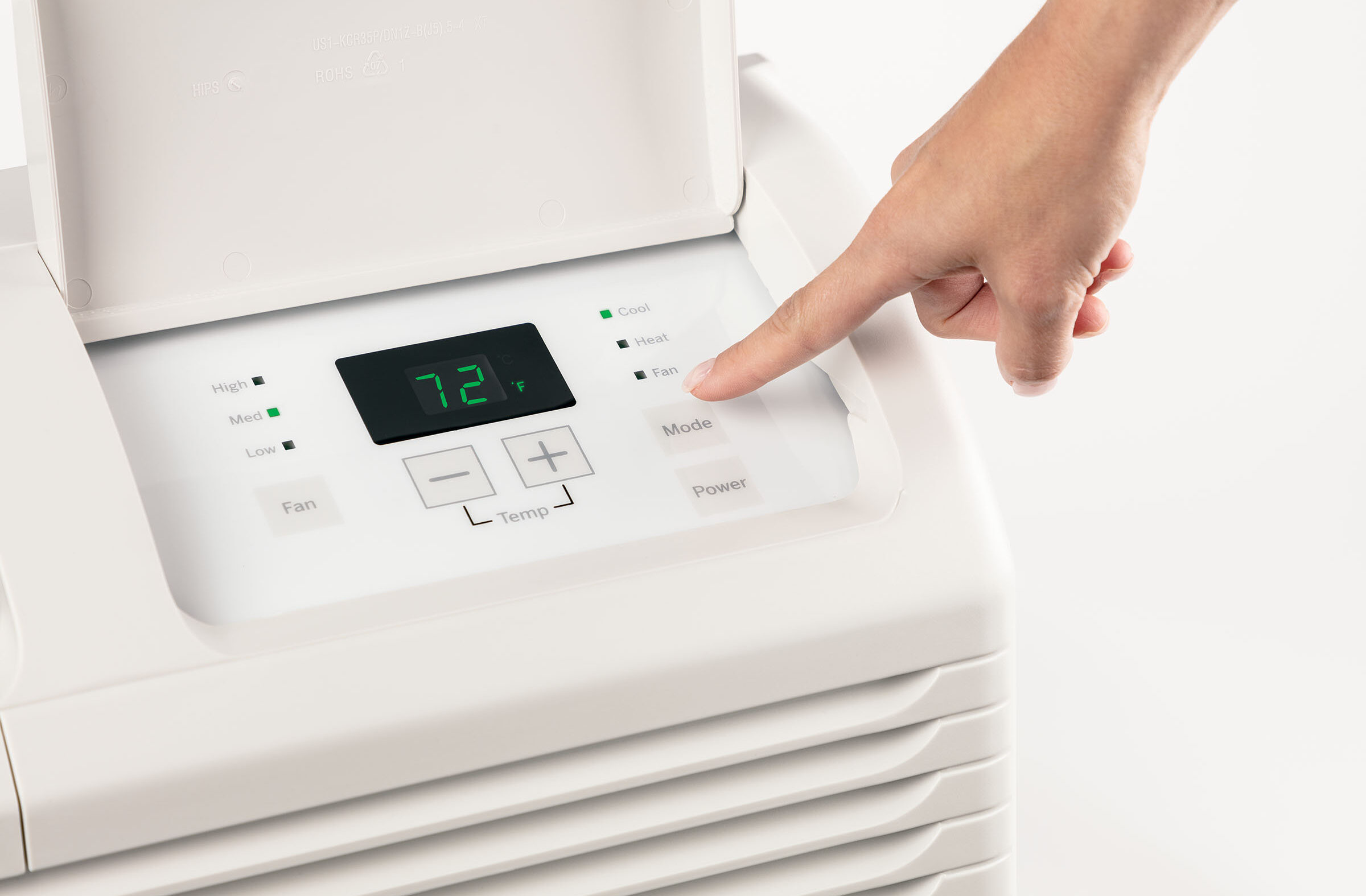
Guests should not need instructions to operate their hotel room’s heating and cooling system. Hotpoint PTAC units feature an intuitive electronic control panel that allows guests to adjust temperature, fan speed, and operating modes. Clear, accessible controls can improve the in-room experience while helping reduce calls to the front desk or maintenance team for basic HVAC assistance.
Individual climate control is particularly valuable in hospitality because temperature preferences vary significantly from one guest to another. A room that feels comfortable to one visitor may feel too warm or too cool to the next.
By giving guests direct control over their environment, PTAC systems allow hotels to accommodate a wider range of comfort preferences.
Temperature Limiting Can Support Energy Management
Guest comfort remains the priority, but unrestricted temperature settings can contribute to unnecessary HVAC runtime and increased energy consumption.
Hotpoint PTAC units offer multiple temperature-limiting options that allow hotel operators to establish approved operating ranges. Guests retain control over their room environment while the property can reduce extreme thermostat settings that may place additional demand on the HVAC system.
Temperature limits may also help support more consistent energy-management practices across a hotel. The appropriate settings will depend on the property’s climate, brand requirements, guest expectations, and sustainability objectives.
When properly configured, temperature limiting can create a practical balance between individual guest comfort and responsible energy use.
Remote Thermostat and Central Desk Control Compatibility
Modern hotel HVAC strategies increasingly extend beyond the controls located directly on the PTAC unit.
Compatible Hotpoint PTAC systems can support remote wall thermostats, allowing properties to create a more familiar residential-style guest experience. Wall-mounted controls may also improve accessibility and provide greater flexibility when designing or renovating guestrooms. Hotpoint PTACs can also work with compatible central desk control systems. Centralized control capabilities may allow hotel teams to manage certain HVAC functions from another location rather than adjusting every unit individually.
Compatibility requirements can vary by PTAC model, thermostat, interface, and control system. Hotel owners should verify the required components and specifications before purchasing or integrating new equipment.
Reliable Comfort During Unexpected Conditions
Power interruptions and sudden temperature changes can affect both guest comfort and hotel operations. Hotpoint PTAC units include protective and recovery features designed to help equipment respond to changing conditions.
Auto power recovery allows compatible units to resume operation following a power interruption. Instead of requiring hotel staff to visit every guestroom and manually restart the equipment, the PTAC can return to its previous operating settings after power is restored. Select heat pump models also include automatic emergency heat. When additional heating is required, the system can use electric resistance heat to supplement heat pump operation and help maintain room comfort.
These capabilities can be especially valuable at larger properties, where manually inspecting or resetting a significant number of guestrooms would require considerable staff time.
Heat Pump and Electric Heat PTAC Options
Hotpoint offers PTAC configurations designed for different climates and property requirements.
Electric resistance heat models use an electric heating element to provide warmth. These systems offer straightforward operation and may be appropriate for properties in warmer climates or locations where heating demand is relatively limited.
Heat pump PTAC models transfer heat rather than relying exclusively on electric resistance heating during standard operation. Under appropriate outdoor conditions, this approach can provide more efficient heating. Many heat pump configurations also incorporate electric heat as a supplemental or backup heating source.
The best option depends on several factors, including:
Regional climate and seasonal temperatures
Guestroom size and cooling load
Expected annual heating demand
Available voltage and electrical capacity
Hotel occupancy patterns
Energy-efficiency objectives
Initial equipment and long-term operating costs
A hospitality HVAC specialist can help determine which configuration is best suited to the property.
Multiple Fan Speeds for Personalized Guest Comfort
Airflow and sound can influence how guests perceive the comfort of a hotel room. Hotpoint PTAC units offer multiple fan-speed settings, allowing guests to select an airflow level that matches their preferences. Lower fan settings may provide gentler air circulation, while higher settings can distribute conditioned air more rapidly.
Hotpoint PTACs also use a tangential fan design intended to promote smooth airflow throughout the room. Consistent air distribution can help reduce hot or cold areas and create a more comfortable guest environment.
Actual operating sound and airflow performance vary by model, capacity, installation conditions, and room design. Properties should review current product specifications when comparing individual units.
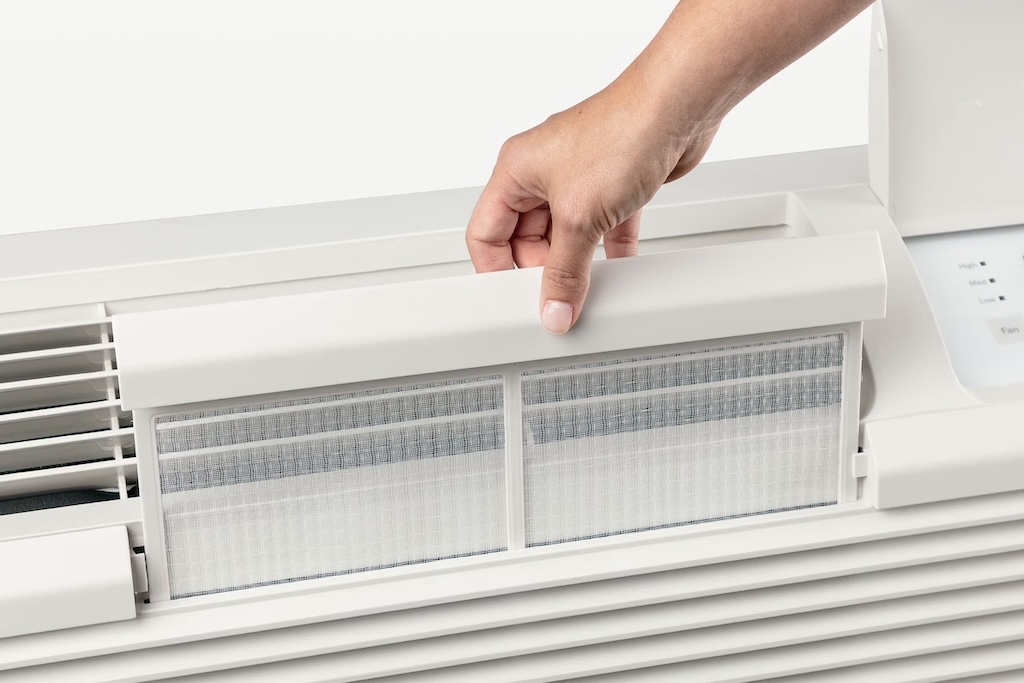
Hotel-Friendly Maintenance and Self-Diagnostics
Maintenance accessibility is an important consideration when purchasing PTAC units for a hotel. Even small improvements in service efficiency can become significant when multiplied across a large property. Equipment that is easier to inspect, diagnose, and maintain can help engineering teams complete routine work more efficiently and reduce guestroom disruption.
Hotpoint PTAC units feature removable filters that provide convenient access for routine cleaning. Regular filter maintenance can support airflow, HVAC performance, indoor comfort, and equipment longevity.
Built-in self-diagnostics also help maintenance teams identify potential service requirements. Diagnostic codes provide technicians with additional information about the unit’s operating condition, reducing some of the uncertainty involved in troubleshooting.
Self-diagnostic capabilities do not eliminate the need for trained HVAC professionals, but they can provide a useful starting point when evaluating equipment performance.
Protective Features Designed for Dependable Operation
Hotel PTAC systems operate throughout changing seasons and may encounter a wide range of indoor and outdoor conditions.
Hotpoint PTAC units incorporate protective functions such as automatic indoor frost control and freeze-protection capabilities on applicable models. These features are designed to help maintain proper operation and protect the guestroom environment during certain low-temperature conditions.
Protective functions are particularly valuable for guestrooms that may be temporarily unoccupied. During periods of lower occupancy, hotels still need to maintain appropriate indoor conditions and protect rooms from potentially damaging temperature extremes. Available features vary by model, making it important to review the current specification sheet before selecting equipment.
Simplified PTAC Installation
Hotpoint PTAC units are designed for through-the-wall installation using the standard PTAC form factor commonly found throughout the hospitality industry.
Many models include the appropriate LCDI power cord, helping simplify equipment preparation and installation. However, hotel owners should confirm sleeve compatibility, electrical requirements, voltage, amperage, power-cord configuration, and accessory requirements before ordering replacement units.
A PTAC with the correct physical dimensions may not necessarily match the electrical or operational requirements of the existing installation.
Before purchasing hotel PTAC units, verify:
Required cooling capacity
Electric heat or heat pump configuration
230/208-volt or 265-volt requirements
Required amperage
Wall sleeve and exterior grille compatibility
Power-cord configuration
Remote thermostat requirements
Central control or energy-management compatibility
Reviewing these details before installation can help reduce project delays, unexpected electrical work, and compatibility issues.
How to Choose the Right Hotpoint PTAC for a Hotel
Selecting a PTAC involves more than choosing the highest available cooling capacity.
An oversized unit may cool a room rapidly but cycle more frequently and provide less effective humidity management. An undersized system may operate continuously while struggling to maintain the desired temperature.
Guestroom size is an important starting point, but HVAC requirements may also be affected by ceiling height, insulation, window area, sun exposure, climate, occupancy, building orientation, and heat-generating equipment within the room.
Hotel owners should also consider the property’s broader operational goals. A limited-service hotel in a warm climate may have different heating requirements than an extended-stay property in a region with prolonged winter temperatures.
Working with an experienced hospitality HVAC supplier can help ensure that cooling capacity, heating configuration, voltage, accessories, and controls align with the property’s requirements.
Are Hotpoint PTAC Units a Good Choice for Hotels?
Hotpoint PTAC units can be a strong option for hotels seeking straightforward guest controls, individual room heating and cooling, accessible maintenance features, and value-oriented equipment.
Their combination of temperature limiting, multiple fan speeds, remote thermostat compatibility, central desk control capabilities, self-diagnostics, removable filters, and operational protection addresses many of the practical requirements associated with hotel HVAC management.
The ideal PTAC solution will ultimately depend on the property. Hotel owners should evaluate climate, room design, brand standards, electrical infrastructure, energy objectives, maintenance requirements, and total operating costs before selecting equipment.
For properties prioritizing dependable performance and operational simplicity at an accessible price point, Hotpoint PTACs provide a practical hospitality climate-control solution.
Frequently Asked Questions About Hotpoint PTAC Units
What does PTAC stand for?
PTAC stands for packaged terminal air conditioner. A PTAC is a self-contained heating and cooling system installed through an exterior wall. Hotels commonly use PTAC units to provide independent climate control in individual guestrooms.
Are Hotpoint PTAC units designed for hotels?
Hotpoint PTAC units are suitable for hotels and other commercial properties requiring individual room climate control. Their guest-friendly controls, temperature-limiting options, maintenance features, and thermostat compatibility make them applicable to many hospitality environments.
Do Hotpoint PTAC units provide both heating and cooling?
Yes. Hotpoint offers PTAC configurations with cooling and electric resistance heat as well as heat pump models with supplemental electric heat. Available capacities and configurations vary by model.
What is the difference between an electric heat PTAC and a heat pump PTAC?
An electric heat PTAC primarily uses electric resistance heating. A heat pump PTAC transfers heat during normal heating operation and may use electric resistance heat for supplemental or emergency heating. Heat pump performance and efficiency depend partly on outdoor conditions.
Can Hotpoint PTAC units connect to wall thermostats?
Compatible Hotpoint PTAC models can work with remote wall thermostats when the appropriate interface, wiring, and accessories are installed. Compatibility should be verified for the specific PTAC model and thermostat.
Can hotels limit the temperature settings on Hotpoint PTACs?
Hotpoint PTAC units offer temperature-limiting options on applicable models. These settings allow hotel operators to establish approved temperature ranges while maintaining guest control within those parameters.
Are Hotpoint PTAC filters easy to clean?
Hotpoint PTAC units include removable filters designed to simplify routine access and cleaning. Hotels should establish a preventive maintenance schedule based on occupancy, environmental conditions, manufacturer recommendations, and property requirements.
Do Hotpoint PTACs restart after a power outage?
Compatible Hotpoint PTAC units include auto power recovery, allowing the equipment to resume operation following a power interruption. The exact behavior may depend on the model and system configuration.
What size Hotpoint PTAC does a hotel room need?
The appropriate PTAC capacity depends on more than room square footage. Climate, insulation, window area, sun exposure, ceiling height, occupancy, and building design can all affect heating and cooling requirements. A professional load assessment is recommended when specifications are uncertain.
Find the Right Hotpoint PTAC Solution with Transworld
Choosing the right hotel PTAC requires careful consideration of cooling capacity, heating configuration, voltage, amperage, controls, accessories, installation requirements, and long-term operating needs.
Transworld Hospitality Tech Products helps hotels and hospitality businesses evaluate PTAC solutions based on their property requirements. Whether you are replacing individual units, renovating guestrooms, converting a property, or planning a large-scale HVAC project, our team can help identify compatible equipment and coordinate hospitality-focused distribution.
Explore our selection of Hotpoint PTAC units and specifications, or contact Transworld to request pricing and discuss the heating and cooling requirements for your property.