Quick Answer and Synopsis: Amana PTAC and VTAC units give hotels quiet, energy efficient, and durable in room climate control that is built for commercial spaces. This guide explains how Amana units work, what sets them apart for hospitality, the configurations available, and how to choose the right model for your property.
A Brief History of Amana
Amana is a staple, and has been an American home comfort name since 1934. It all began in the small community of Amana, Iowa. Over the past decades the brand built a reputation for dependable heating and cooling, and its packaged terminal units became a familiar sight in hotels, apartments, and healthcare facilities across the country.
Today Amana packaged terminal air conditioners and vertical terminal units are a mainstay of hospitality climate control, chosen for the balance they strike between comfort, efficiency, and long service life.
Amana PTAC and VTAC Units Explained
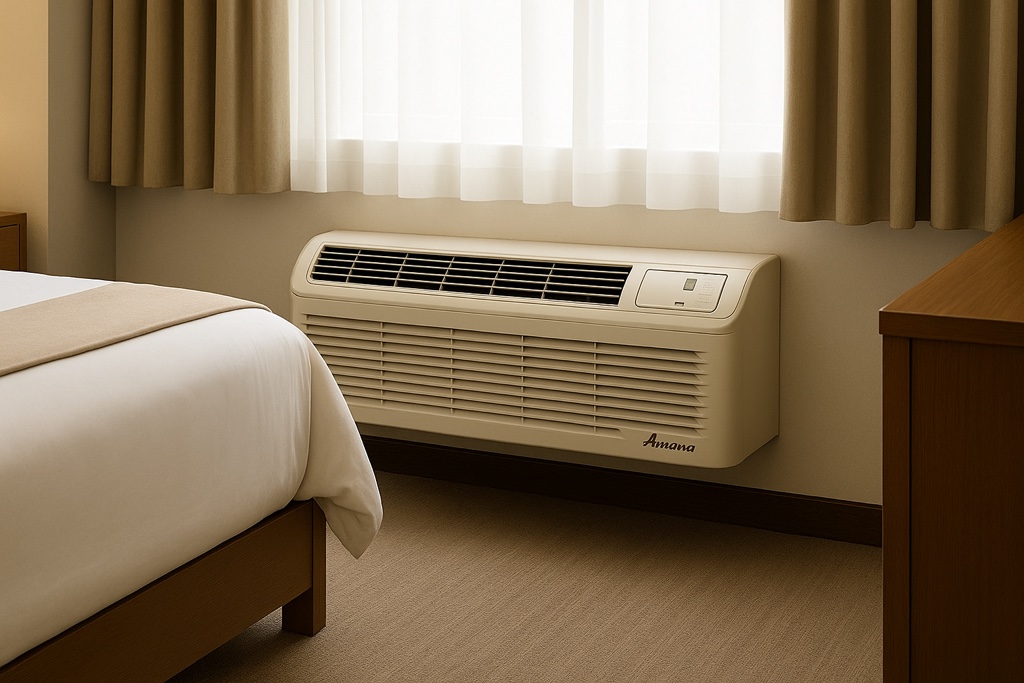
A packaged terminal unit puts heating and cooling in a single self contained cabinet that serves one room, which gives each guest independent control without the cost and complexity of central ductwork.
What is a PTAC?
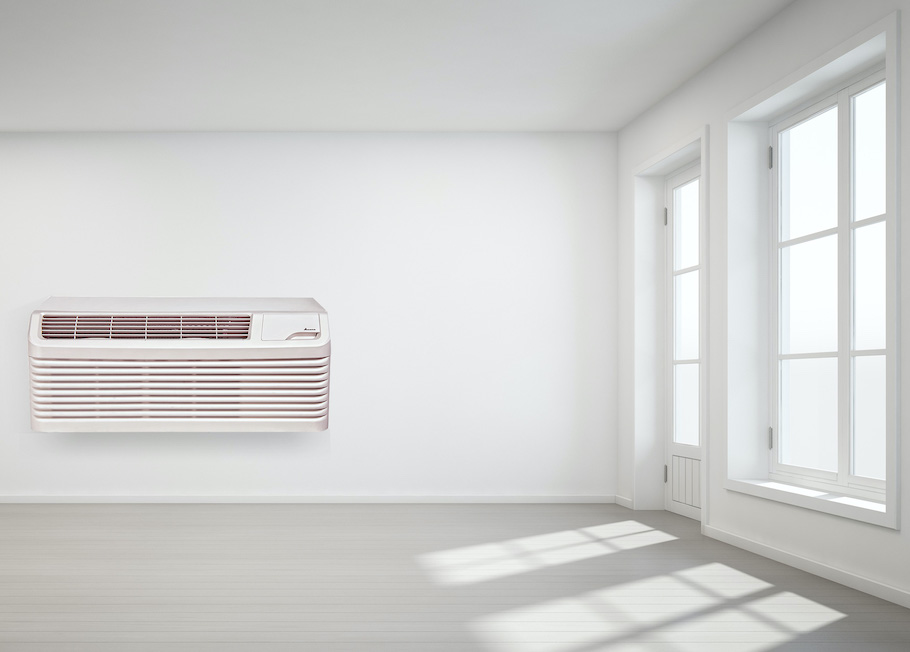
A PTAC, or packaged terminal air conditioner, mounts through an exterior wall, usually under a window. It is the most common in room unit in hotels because it is straightforward to install and service.
What is a PTHP?
A PTHP, or packaged terminal heat pump, is the heat pump version of a PTAC. It moves heat rather than generating it with electric resistance alone, which makes it more efficient to heat in mild and moderate climates.
What is a VTAC?
A VTAC, or vertical terminal air conditioner, is built to be placed in a closet or mechanical chase and delivers air through short ducts. It is a strong fit for new construction and layouts where a through wall unit is not practical.
Why Hotels Choose Amana
Amana has earned its place in guest rooms by solving the problems that keep operators up at night.
Quiet operation
Guests notice noise, and it shows up in reviews. Amana designs its units to run quietly so the room stays restful and the climate system fades into the background where it belongs.
DigiSmart energy management
Many Amana units are available with DigiSmart controls, an energy management system that can sense occupancy and set the temperature back when a room is empty. It trims energy use without asking your staff to manage anything room by room.
Corrosion resistance for coastal properties
For hotels near the coast, salt air is a silent budget killer. Amana offers corrosion resistant construction and coated coil options that help units survive the environment that wears ordinary equipment down long before its time.
Durable, serviceable design
Amana units are built for the constant duty cycle of a hotel, and they are designed so routine service is quick. Widely available parts and a familiar layout mean less downtime and fewer rooms out of service.
Guest friendly comfort
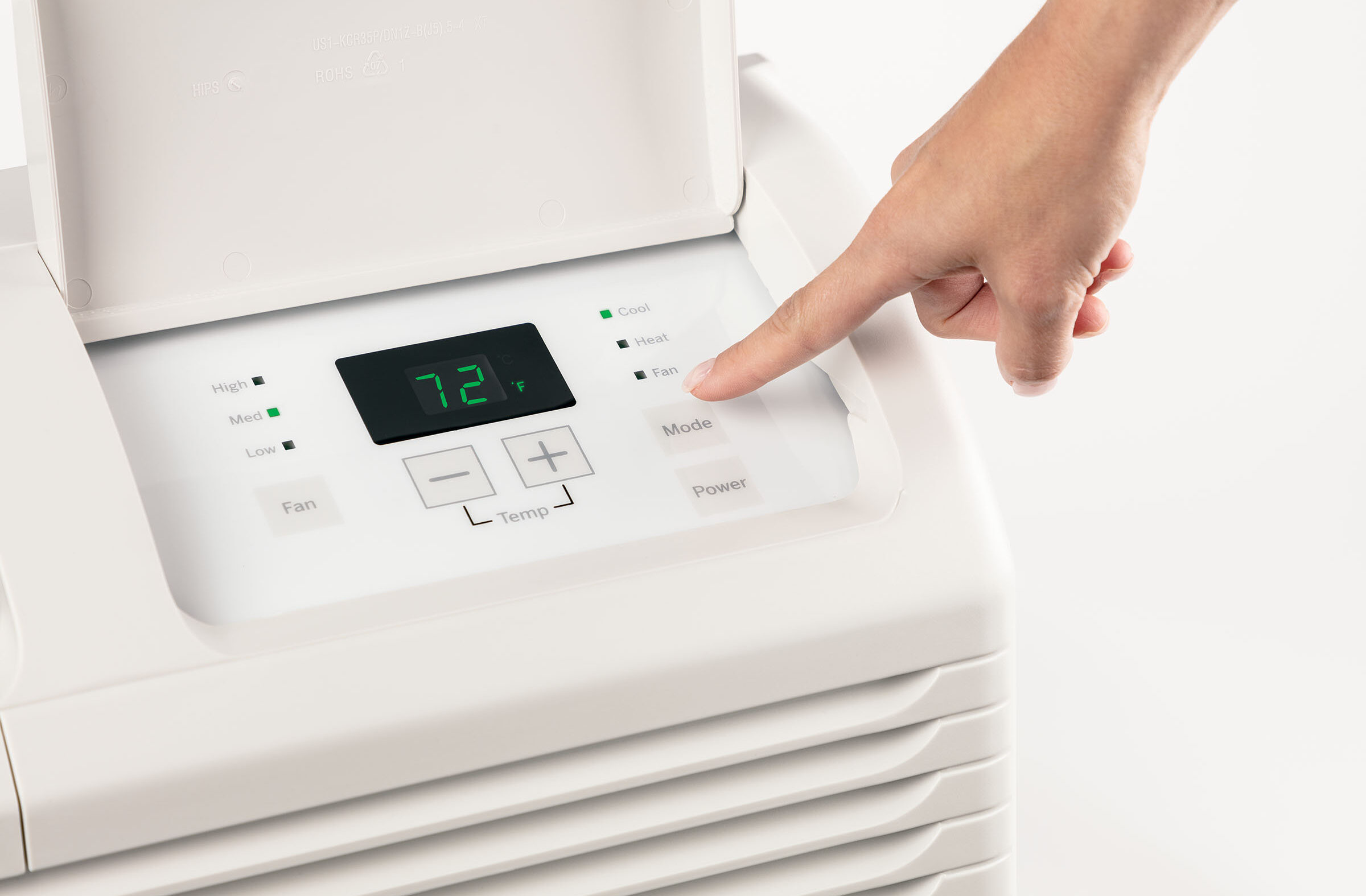
Simple, intuitive controls let guests dial in their own comfort without a call to the front desk, which protects both the guest experience and your staff's time.
Amana Options and Configurations
Choosing an Amana unit comes down to matching the configuration to the room and the climate.
PTAC vs PTHP: choose a straight PTAC where heating needs are light or electric resistance heat is preferred, and a PTHP where you want more efficient heating across the shoulder seasons.
VTAC: choose a vertical unit for new builds, interior rooms, or facades where a through wall unit is not an option.
Capacity: packaged terminal units are commonly available from roughly 7,000 to 15,000 BTU, sized to the room so the unit neither overworks nor short cycles.
DigiSmart energy management: add it where you want automatic setback and occupancy based savings.
Corrosion protection: add it for coastal and high humidity locations.
How to Choose the Right Amana Unit for Your Property
Use this quick checklist before you order:
Confirm your brand's technology and equipment standards.
Measure each room and match the BTU capacity to the space.
Decide between resistance heat and a heat pump based on your climate.
Choose PTAC for retrofits or VTAC for new builds and hidden installs.
Add corrosion protection if you are near the coast.
Add DigiSmart if energy savings and occupancy setback matter to you.
Plan for wall sleeves, grilles, and the right electrical service.
Is Amana a Good Choice for Your Hotel?
For most hotels, yes. Amana pairs proven reliability with the features that matter in hospitality, quiet comfort, energy management, and durability, at a value that works for both renovations and new construction. If you operate near the water or want to cut energy costs across a large room count, the corrosion and DigiSmart options make the case even stronger.
Frequently Asked Questions About Amana PTAC & VTAC
What is the difference between a PTAC and a VTAC?
A PTAC mounts through an exterior wall and serves the room directly, while a VTAC hides vertically in a closet or chase and delivers air through short ducts. PTACs suit retrofits and standard rooms, and VTACs suit new construction and interior layouts.
Are Amana PTAC units energy efficient?
Yes. Amana offers heat pump models and the DigiSmart energy management system, which can set the temperature back when a room is unoccupied to reduce consumption.
How long do Amana PTAC units last?
With proper installation and routine maintenance, hospitality PTAC units generally serve for several years of daily use. Regular filter cleaning and coil care extend their life.
Are Amana units suitable for coastal hotels?
Yes, when specified with corrosion resistant construction. Coastal properties should always order the corrosion protection option to stand up to salt air.
What size Amana unit do I need?
Match the BTU capacity to the room size. Undersized units struggle to keep up and oversized units short cycle, so proper sizing is key. Our team can help you size each room.
Do Amana units meet hotel brand standards?
Amana packaged terminal units are widely accepted across major hotel brands, though requirements vary. Always confirm your specific brand's current technology standards before ordering.
Find the Right Amana Unit with Transworld
Ready to outfit your guest rooms with dependable Amana climate control? Our hospitality technology products team can help you size, specify, and order the right units for your property.
Email sales@twstransworld.com or call 800.424.8550.
For any questions, please email your Sales Representative.