Your guests’ comfort is all-important and a no-brainer when it comes to maintaining high client satisfaction. From providing comfortable sheets and blankets to offering enough towels to last their stay, hotel owners need to think ahead and know what visitors will need before they request it.
This foresight and preparedness also extends to temperature control inside each guest room. Everybody has different temperature preferences, so guests need independent control of their room’s climate.
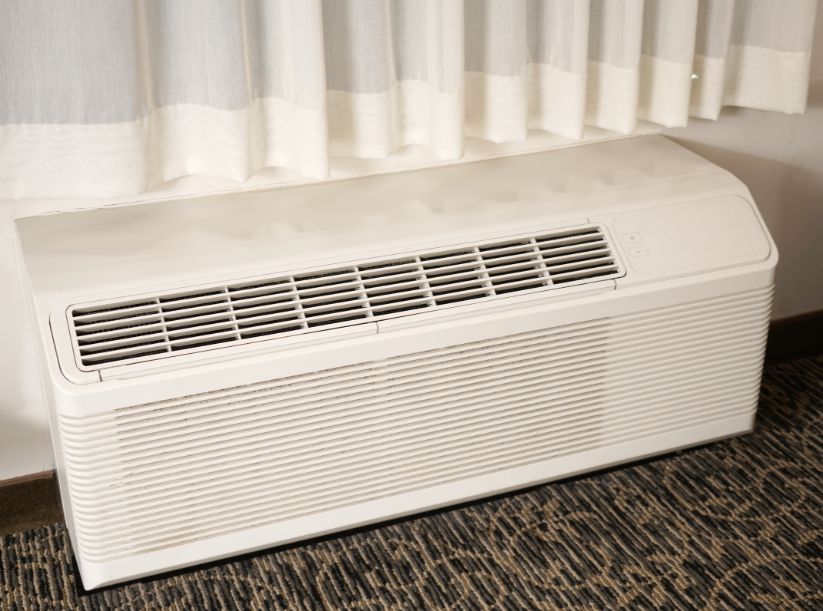
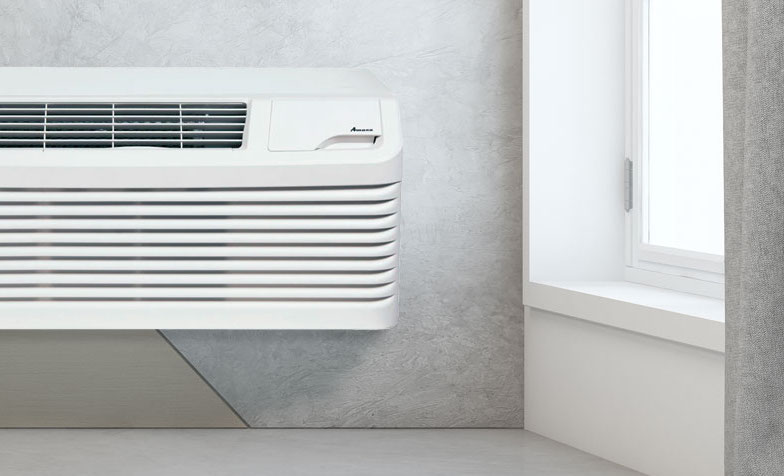
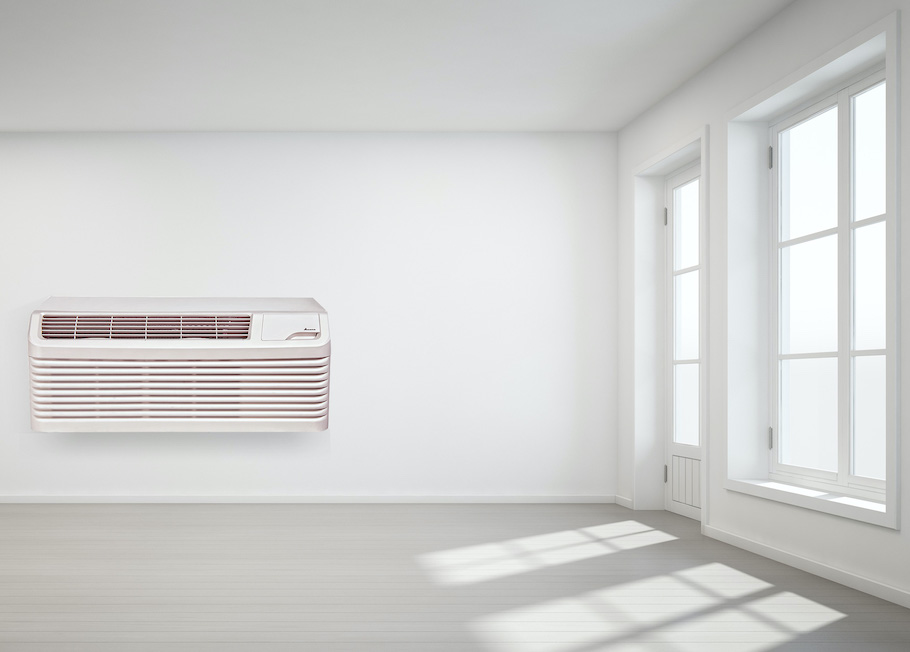
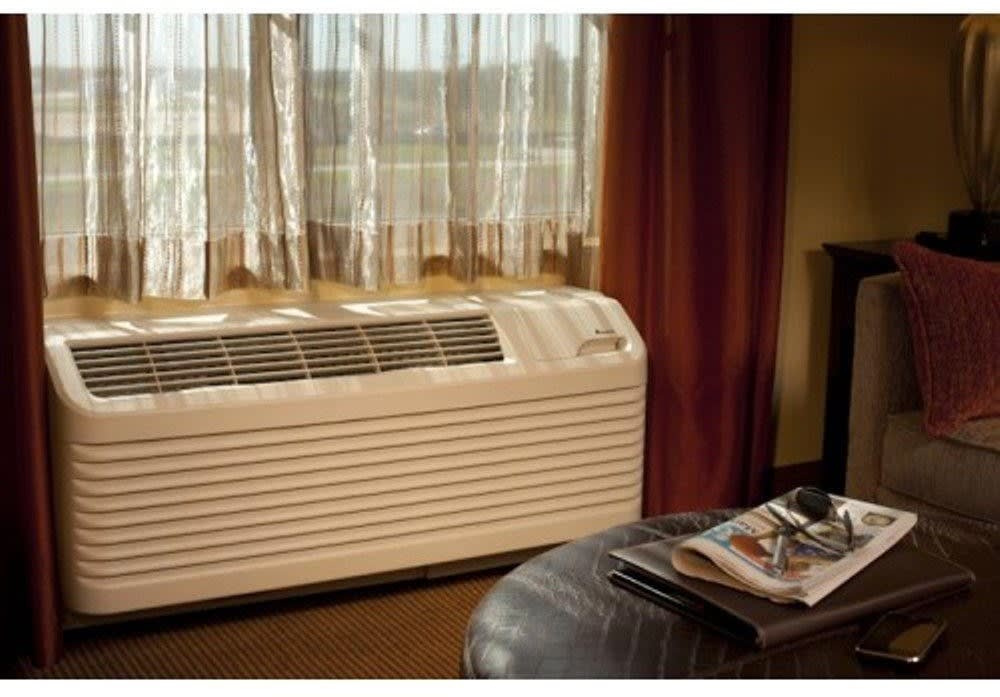
Packaged terminal air conditioners (PTAC units) provide that independence, letting guests adjust the level of heat or cooling as needed.
PTAC systems have long been the industry standard HVAC solution for hotels, motels, resorts, extended-stay properties, and healthcare facilities because they offer:
Individual room climate control
Energy-efficient heating and cooling
Easy maintenance and replacement
Long operational lifespans
Read on to learn a few key factors that can help you choose the right PTAC unit for hotel rooms.
FYI, here's our list of the best PTAC & AC units for your hospitality business. Are there any models that you think should be here from our hospitality products list?
Room Size Matters
If you’ve heard of BTUs (British Thermal Units) but aren’t quite sure what they measure, here’s the quick explanation. BTUs represent how much heat an air conditioner can remove from a room per hour. The higher the BTU rating, the larger the space the unit can cool effectively.
In short: The bigger the room, the more BTUs you need.
Most hotel rooms fall between 250–450 square feet, but the ideal BTU output can vary depending on factors such as:
Ceiling height
Sun exposure
Window size
Climate region
Occupancy levels
Typical BTU Recommendations for Hotel Rooms
Room Size | Recommended BTU |
|---|
200–300 sq ft | 7,000–9,000 BTU |
300–400 sq ft | 9,000–12,000 BTU |
400–500 sq ft | 12,000–15,000 BTU |
Most hospitality properties install 9,000–12,000 BTU PTAC units, which comfortably handle standard guest room sizes.
Measure each hotel room’s square footage, even if they appear uniform. As the room size increases, so should the BTU capacity of your PTAC units.
If your property is located in warmer regions with high summer temperatures, choosing a slightly higher BTU rating can help maintain consistent comfort.
To help with this we made a video to explain how many BTUs you need based on the room size.
Voltage and Amperage
This is where your electrician or maintenance team plays a critical role.
HVAC systems require significant electrical power, and the larger the unit, the more demand it places on your building’s electrical infrastructure.
When selecting a PTAC unit, verify:
If a PTAC unit draws more power than the circuit can safely supply, it could lead to:
Tripped breakers
Reduced performance
Overheating wires
Electrical fire hazards
Most professional installers will confirm electrical compatibility, but hotel owners and facility managers should still understand the requirements before purchasing.
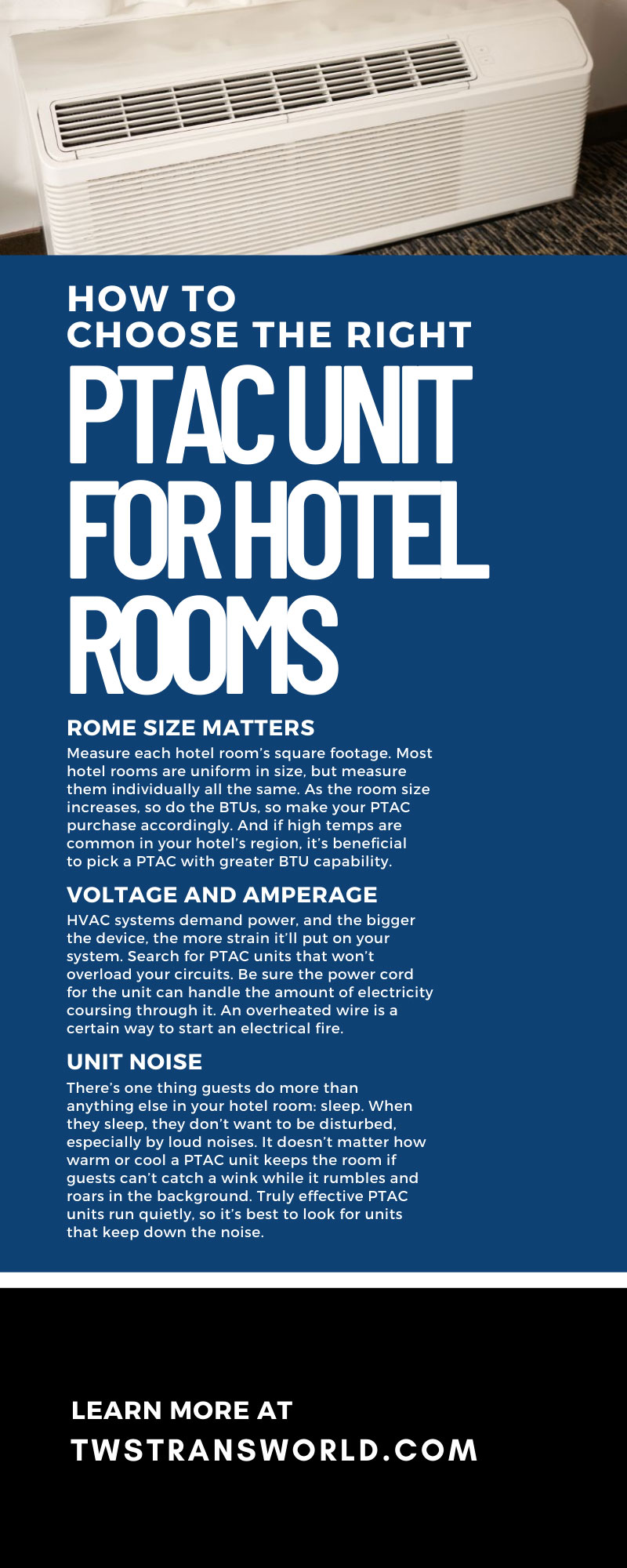
Quiet Operation Is Essential for Guest Satisfaction
There’s one thing guests do more than anything else in their hotel room: sleep.
And when they sleep, they don’t want to be disturbed, especially by a loud HVAC unit humming in the background.
Even if a PTAC unit keeps the room perfectly cool or warm, excessive noise can negatively affect the guest experience and lead to poor reviews.
When comparing models, look for:
Modern PTAC units are significantly quieter than older models, so upgrading can improve both comfort and online guest ratings.
Energy Efficiency and Operating Costs
Energy efficiency is one of the most important considerations for hospitality properties operating dozens, or even hundreds, of rooms.
Energy-efficient PTAC units can significantly reduce long-term electricity costs.
Look for features such as:
While energy-efficient units may cost more upfront, they typically pay for themselves through lower operating expenses over time.
Hotels that upgrade their HVAC equipment often see noticeable reductions in energy bills within the first year.
Climate Considerations
Before selecting a PTAC system, think about the typical climate conditions in your region.
For example:
Southern climates: cooling is needed most of the year
Northern climates: heating may be the primary demand during winter months
Coastal climates: humidity control may be critical
All PTAC units include electric heating, but some models feature heat pumps, which draw warmth from the outdoor air. Heat pumps are typically more energy-efficient than electric resistance heating when temperatures are moderate; however, when outdoor temperatures drop significantly, electric heat may provide better performance.
Choosing a system that balances cooling efficiency and reliable heating ensures guests remain comfortable year-round.
Durability and Long-Term Reliability
Hotel PTAC units operate far more frequently than residential air conditioners., because of constant use and guest adjustments, durability matters.
When researching PTAC models, pay attention to:
Read product reviews and feedback from other hospitality operators whenever possible.
Reliable PTAC units should operate for many years with minimal issues, provided they are properly maintained.
FYI, here's a quick guide for how to properly maintain and optimize the use of your PTAC units.
Maintenance and Service Accessibility
PTAC systems are widely used in hospitality because they are relatively easy to maintain and replace.
Still, choosing a unit with accessible service components can save time and money for your maintenance team.
Look for models that include:
Regular maintenance, such as cleaning filters and coils, helps ensure units operate efficiently and last longer.
Installation Requirements
Many HVAC suppliers offer professional PTAC installation services, which can simplify the process for hotel owners.
If installation must be handled internally, consider:
Improper installation can reduce efficiency and shorten the lifespan of the unit, so it’s important that installation is handled by trained technicians.
In many cases, paying for professional installation can prevent costly mistakes.
Price vs Long-Term Value
Price is naturally an important factor when selecting PTAC units, especially when purchasing equipment for multiple rooms.
Higher-quality units typically include:
Better energy efficiency
Quieter operation
More durable components
Longer warranties
While budget models may cost less initially, they often require more frequent repairs or replacement, which can increase long-term costs.
Hotel owners should evaluate total cost of ownership, not just the purchase price.
PTAC Unit Design and Appearance
Once you’ve narrowed down the technical requirements, you can consider aesthetic factors.
While PTAC units are designed primarily for performance, appearance still matters in guest rooms.
Look for designs that are:
A sleek unit that blends into the room can enhance the overall guest experience.
Some properties even choose custom front panels or recessed installations for a more polished look.
Quick PTAC Buying Checklist for Hotels
Before purchasing a PTAC unit, confirm the following:
✔ Correct BTU capacity for room size
✔ Voltage and electrical compatibility
✔ Quiet operation
✔ Energy-efficient performance
✔ Climate-appropriate heating options
✔ Durable construction
✔ Easy maintenance access
✔ Compatible installation requirements
✔ Strong warranty coverage
This checklist helps ensure you select a system that provides both comfort for guests and value for your property.
Questions About PTAC Units or Other Hotel Technology Products?
Choosing the right hotel HVAC units can make a significant difference in guest comfort, energy costs, and long-term maintenance expenses.
At Transworld, we specialize in PTAC units and hospitality equipment, including:
If you have questions about hotel PTAC systems or hospitality technology products, don’t hesitate to contact us for a free consultation.
We’re always happy to help you find equipment that keeps your guests comfortable and your business running smoothly.