When hotels shop for new in-room hospitality TVs, one technical term comes up again and again: Pro:Idiom. At the same time, many vendors also promote “non-DRM” or “Lite” hospitality TVs as a cheaper alternative. For busy owners and operators, it’s not always clear what the real differences are, or how those differences affect the guest experience and long-term ROI.
Below is a clear, hotel-focused comparison, written for decision-makers who need to balance budget, brand standards, and future-proofing.
What Is Pro:Idiom?
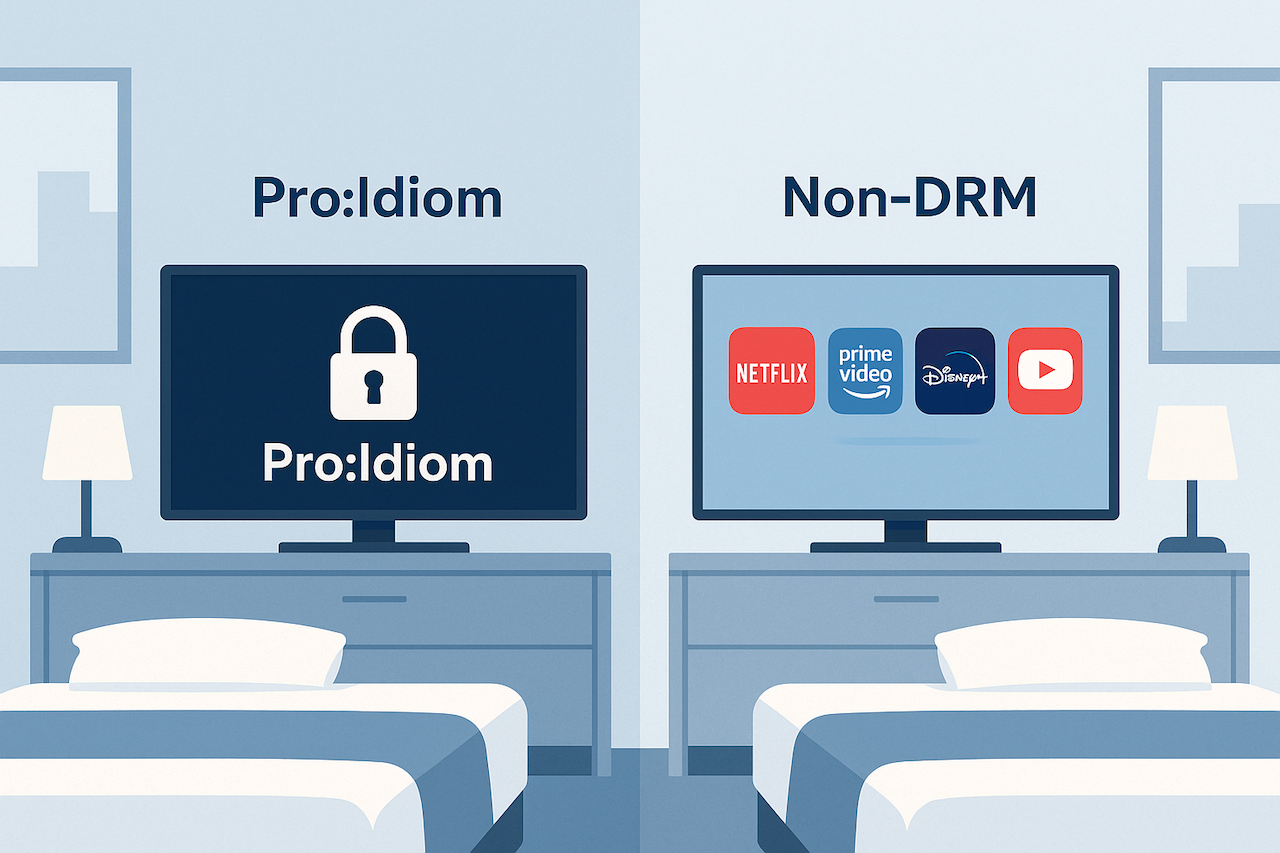
Pro:Idiom is a digital rights management (DRM) technology built into many commercial hospitality TVs and headend systems. It is designed to:
Securely decrypt encrypted HD and 4K content from satellite, cable, or IPTV providers
Prevent unauthorized copying or redistribution of that content
Meet the content protection requirements of major movie studios, premium channels, and many pay-TV providers
In practical terms, if you want to offer:
HD or 4K linear channels from a commercial provider
Encrypted QAM or IPTV channels
Premium movie and sports content that requires DRM
Pro:Idiom-enabled TVs (or an equivalent DRM solution) are often required under your content agreements.
What Are Non-DRM / Lite Hospitality TVs?
“Non-DRM” or “Lite” hospitality TVs are commercial-grade displays without built-in content decryption like Pro:Idiom. They may still offer:
Basic hospitality features (welcome logo, volume limits, input lockout)
Multiple HDMI inputs
Simple cloning and setup menus
However, these TVs are typically limited to:
Clear-QAM, analog, or over-the-air channels
External streaming devices (Apple TV, Roku, Chromecast, etc.)
Basic in-room use where content protection is not enforced by providers
They can be attractive because they are usually cheaper up front, but they come with real content and integration limitations.
Content & Channel Options: Where the Gap Really Shows
From a guest’s point of view, content is everything. This is where the choice between Pro:Idiom and non-DRM/Lite TVs really starts to matter.
With Pro:Idiom TVs
Hotels can typically:
Offer full HD/4K channel lineups from cable, satellite, or IPTV headends that use encrypted streams
Provide premium movie channels and sports packages that require DRM
Comply with brand standards that specify Pro:Idiom, LYNK DRM, or equivalent
Integrate with advanced IPTV and interactive systems that rely on secure content delivery
The result: a “home-like or better” TV experience that feels modern and complete.
With Non-DRM / Lite TVs
Hotels are usually limited to:
Unencrypted channels only (clear-QAM, OTA)
Potentially fewer HD or 4K options
Limited or no access to some premium channel packages
Dependence on consumer streaming devices or casting as the main value-add
This can work for budget properties or long-stay hotels where guests primarily stream their own content, but it may not meet expectations for higher-end or branded hotels.
Security, Legal, and Brand Standard Considerations
Content protection is not just a technical detail; it’s part of your legal obligations with content providers.
Pro:Idiom TVs
Built specifically to meet Hollywood and content provider requirements
Reduce risk of non-compliance with programming contracts
Often explicitly required by major brands and system integrators
Help protect the hotel if there’s ever a question about unauthorized redistribution of premium content
Non-DRM / Lite TVs
May be non-compliant with certain content agreements if used to distribute encrypted channels without proper DRM
Can limit which content providers and packages your property is allowed to offer
May require additional external hardware or a different content model (e.g., streaming-only) to stay compliant
If your hotel brand or management company has strict TV standards, non-DRM/Lite TVs may not even be an option for new builds or renovations.
Total Cost of Ownership: Beyond the Purchase Price
At first glance, non-DRM / Lite TVs can look like a smart way to save money. But for hotels, it’s important to consider the total cost of ownership (TCO), not just the invoice price.
Pro:Idiom TVs – Higher CapEx, Lower Friction
Usually higher initial cost per TV
Minimize the need for extra external decryption hardware
Fit easily into existing Pro:Idiom or IPTV headend systems
More likely to remain compatible with future content and system upgrades
Over 5–7 years (the typical life of a hospitality TV), the added flexibility and reduced complexity often offset the higher upfront price.
Non-DRM / Lite TVs – Lower CapEx, Hidden Trade-Offs
Lower purchase price per TV
May require additional hardware (set-top boxes, streaming players) to deliver the desired content mix
Can complicate wiring, mounting, and maintenance if every TV needs an external device
Risk of needing an earlier replacement if brand standards change or content providers tighten DRM requirements
For smaller independent hotels or economy properties focused on minimal channel packages and streaming, Lite TVs can still make financial sense, if you’re confident your content strategy will remain simple.
Guest Experience: How It Feels in the Room
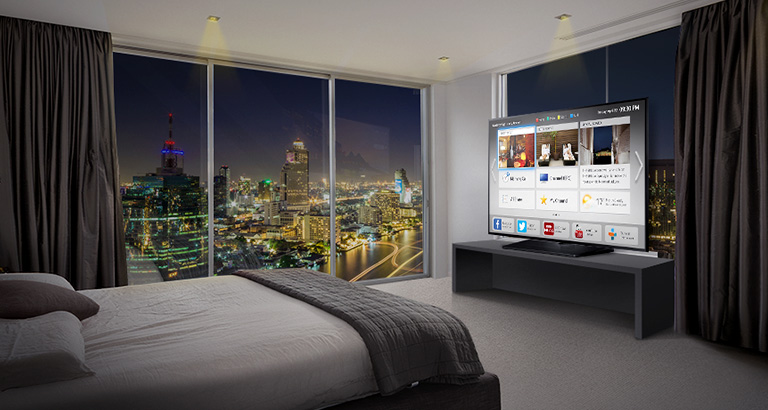
Guests don’t ask if the TV has Pro:Idiom, they just know whether the system feels modern, easy, and robust.
Pro:Idiom-Based Setups
Typically integrate with interactive program guides, hotel info channels, and even PMS-linked services
Support channel lineups that feel like home
Reduce “no signal,” odd channel gaps, or inconsistent quality across rooms
Pair well with casting or native streaming apps on newer platforms
Overall, Pro:Idiom TVs enable a polished, brandable in-room experience that can match the look and feel of your property.
Non-DRM / Lite TV Setups
Often depend on consumer streaming devices or simple clear-QAM lineups
May deliver a good experience if the Wi-Fi is strong and guests are comfortable logging into their own apps
Can feel basic if there is a limited channel lineup and no interactive features
This can still be acceptable for hostels, budget hotels, and smaller independents, but it may fall short for upper-midscale, upscale, or lifestyle brands.
When Pro:Idiom Is the Better Choice
Pro:Idiom-enabled hospitality TVs are usually the best fit when:
You are part of a major hotel brand or following strict brand standards
You want to offer premium channels, HD/4K content, and full encrypted lineups
You’re planning a new headend or IPTV system with interactive features
You want to future-proof your TV investment against changing content requirements
In these cases, Pro:Idiom is less of a “nice-to-have” and more of a must-have foundation.
When Non-DRM / Lite TVs Can Work
Non-DRM / Lite hospitality TVs can be a smart, cost-effective solution when:
You operate an independent or economy property with a simple channel lineup
Your strategy is focused on streaming and casting, not premium linear content
You have no brand requirement for DRM-enabled TVs
You need to stretch CapEx and can accept some limitations on content
The key is to decide up front that your property will live comfortably within those limits and that your target guests will be satisfied with a leaner TV offering.
How TWS Transworld Can Help
Choosing between Pro:Idiom and non-DRM / Lite hospitality TVs is not just a tech decision, it’s a business and guest-experience decision. At TWS Transworld, we help hotels:
Evaluate brand standards and content contracts
Compare Pro:Idiom vs non-DRM TV options from leading manufacturers
Design a TV and content strategy that fits your budget and guest expectations
Plan for future upgrades so today’s investment continues to pay off for years
If you’re unsure which direction is right for your property, the best next step is a quick, tailored review of your property type, existing infrastructure, and content goals.
Ready to upgrade your hotel TVs?
Contact our hospitality tech team to compare Pro:Idiom and Lite TV options for your specific project and budget.