A hotel laundry room may not be the most glamorous amenity, but for many guests, it is one of the most practical. This is especially true at extended-stay hotels, resorts, and properties that welcome families, athletic teams, and long-term business travelers.
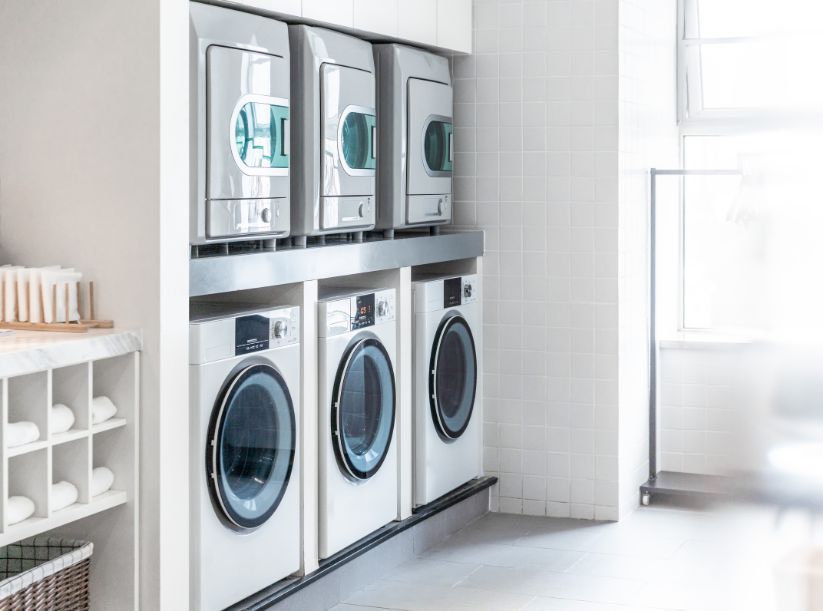
A well-designed guest laundry room should be clean, easy to use, dependable, and comfortable. It should also support efficient operations without creating unnecessary maintenance calls or utility costs. Whether you are planning a new facility or updating an existing one, these six improvements can make a meaningful difference.
1. Create a Functional Laundry Room Layout
The best hotel laundry rooms support a simple guest journey. Guests should be able to enter, load a machine, pay, wait, fold their laundry, and leave without navigating a cramped or confusing space.
Provide enough clearance around the equipment, along with a durable folding surface, waste bin, seating, and room for laundry baskets. Bright lighting and slip-resistant flooring can make the space feel safer and more inviting. Hotels should also consider accessible routes, machine controls, and doorways during planning.
Ventilation matters too. Washers, dryers, and hot-water systems can generate heat and humidity, so review the room’s mechanical requirements during design or renovation.
2. Choose Commercial Laundry Equipment That Fits the Property
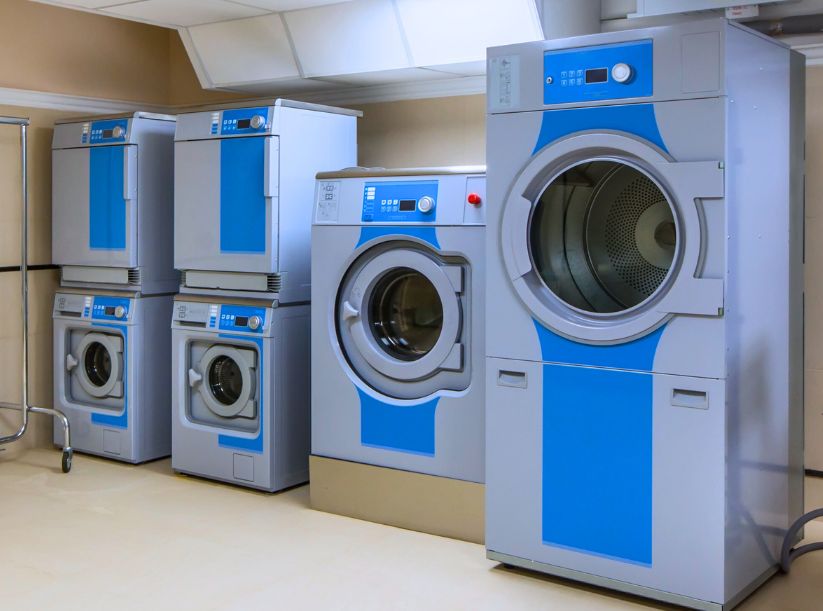
Select hotel laundry equipment according to expected demand, available utilities, room dimensions, and the property’s guest profile. Too few machines can cause long waits, while oversized or underused equipment may increase acquisition and operating costs.
Commercial-grade washers and dryers are built for frequent use and may offer programmable cycles, remote monitoring, and durable components. Before purchasing, confirm the required electrical service, gas connection, water supply, drainage, venting, and door clearances.
Energy and water efficiency should be part of the comparison. According to ENERGY STAR, certified commercial clothes washers are, on average, 9% more energy-efficient and use approximately 45% less water than standard models. Actual savings depend on the equipment, utility rates, and usage at the property.
3. Establish a Preventive Maintenance Schedule
A broken machine can quickly become a guest complaint. Preventive maintenance helps hotels identify worn parts, drainage problems, unusual vibration, and declining performance before equipment goes out of service.
Follow the manufacturer’s recommended service schedule rather than applying one timeline to every model. Between professional inspections, staff can clean lint filters, inspect hoses and connections, check dryer vents, and confirm that payment systems and controls work properly.
Maintain a service log for each unit and give guests a clear way to report problems. When a machine is unavailable, label it promptly so guests do not lose time or money attempting to use it.
4. Keep the Room Clean, Safe, and Well Stocked
Guests expect the laundry room to feel as clean and cared for as the rest of the hotel. Create a regular inspection schedule covering floors, machine exteriors, detergent residue, folding surfaces, trash, and abandoned clothing.
Remove lint according to the manufacturer’s instructions and address spills quickly. Staff should also confirm that detergent, fabric softener, laundry bags, and any other offered supplies remain available.
Routine cleaning also helps employees notice leaks, damaged components, blocked vents, or other issues that need attention.
5. Make Instructions and Payment Simple
Even familiar-looking machines can operate differently. Post concise instructions explaining how to select a cycle, add detergent, pay, and request assistance. Use large, easy-to-read text and simple illustrations where possible. Multilingual guidance may help properties serving international travelers.
Hotels should also evaluate whether coin payment still meets guest expectations. Credit card, contactless, mobile, or app-based payment can improve convenience, although the right system depends on connectivity, fees, and the property’s operating model. Clearly display prices and estimated cycle times before a guest begins.
6. Improve Comfort, Security, and Convenience
Guests may spend considerable time waiting for laundry, so thoughtful details matter. Consider seating, charging outlets, Wi-Fi access, a television, or a small vending area if space allows.
The room should be well lit and located where guests feel secure. Where appropriate, controlled guest access and visible security measures can discourage unauthorized use without making the space feel unwelcoming. Displaying operating hours may also help reduce noise near guestrooms.
Build a Better Hotel Laundry Experience
Improving a hotel laundry room is not simply about installing newer machines. The most effective spaces combine reliable commercial equipment with practical design, clear instructions, consistent maintenance, and a clean, comfortable environment.
If your property is planning an appliance upgrade or wider hotel improvement project, Transworld can help you compare hotel appliances and coordinate solutions around your operational requirements.
Contact our team to discuss your property’s needs.