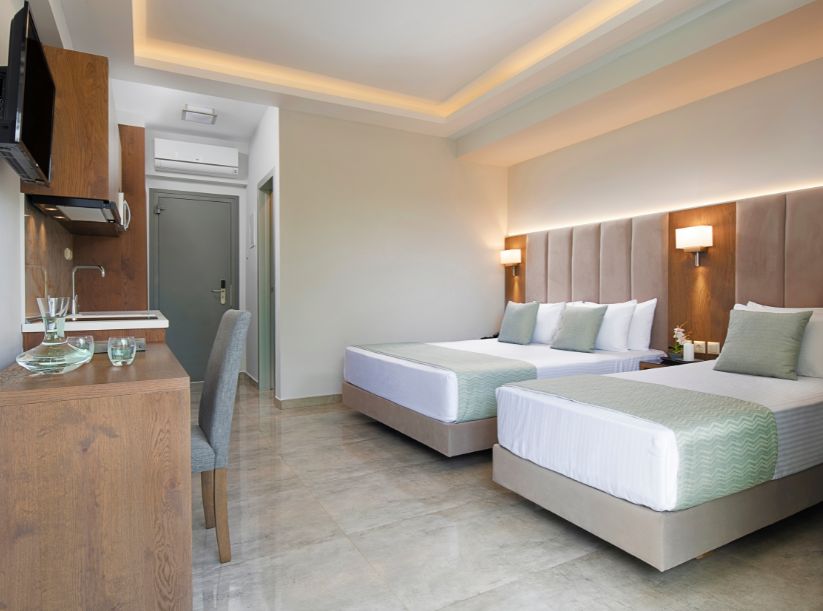
Quick Answer & Synopsis: The most common modern hotel room appliances and devices include a hospitality TV, compact refrigerator, microwave, coffee maker or electric kettle, room-specific climate-control system, hair dryer, iron or garment steamer, in-room safe, charging station, and, in properties where there is a clear need, an air purifier or dehumidifier. Extended-stay hotels typically require a more complete appliance package, which may include a full-size refrigerator, cooktop, dishwasher, and other kitchenette equipment. Not every hotel room needs all ten items. The ideal mix depends on the property type, brand requirements, room size, guest profile, length of stay, and available infrastructure.
Hotel room appliances are a practical part of the guest experience. A refrigerator that keeps food cold, a microwave that is easy to operate, a quiet climate-control system, and a television that connects to a guest’s preferred content can all make a room feel more comfortable and functional. When any of these products are outdated, confusing, or unreliable, guests tend to notice quickly.
For hotel owners and operators, however, choosing appliances involves more than assembling a list of popular amenities. The right equipment must fit the room, align with hotel brand standards, withstand frequent use, remain easy for staff to clean and maintain, and support the property’s long-term operating goals.
What Appliances Should a Modern Hotel Room Include?
The following checklist covers the hotel room appliances and related devices that deliver the most practical value across full-service, select-service, limited-service, resort, and extended-stay properties.
Hotel room appliance or device | Primary value | What hotels should evaluate |
|---|
Hospitality TV | Entertainment and guest communication | Brand approval, screen size, casting, Pro, content management, commercial warranty |
Compact refrigerator | Food and beverage storage | Capacity, energy use, noise, ventilation, door swing, cabinetry clearance |
Microwave | Meal and snack convenience | Wattage, footprint, controls, electrical load, cleaning, safety features |
Coffee maker or electric kettle | In-room beverage convenience | Brew format, replenishment cost, sanitation, shutoff features, regional preferences |
PTAC, VTAC, or other room climate system | Guest comfort and temperature control | Correct capacity, voltage, efficiency, noise, thermostat compatibility, maintenance access |
Hair dryer | Everyday guest convenience | Power, heat settings, mounting or storage, cord design, replaceability |
Iron or garment steamer | Clothing care | Automatic shutoff, storage, surface protection, durability |
In-room safe | Secure storage | Laptop capacity, audit features, override process, mounting, staff procedures |
Charging station or alarm clock | Device charging and bedside convenience | USB-C support, outlet access, cable management, simplicity, replaceable modules |
Air purifier or dehumidifier | Targeted air-quality or moisture support | Room size, noise, filters, drainage, maintenance burden, local climate |
1. A Commercial Hospitality TV With Secure Casting
The television remains one of the most visible pieces of technology in a guest room, but a modern hotel TV should do more than display a channel lineup. Current hospitality televisions can support hotel-specific controls, encrypted programming, customized welcome content, centralized management, and, depending on the model and system, secure casting through Google Cast or Apple AirPlay.
This is an important distinction. A consumer smart TV may look similar, but it generally is not designed for hotel deployment, centralized configuration, brand-required integrations, or the same commercial use case. Allowing guests to sign directly into apps without a reliable credential-clearing process can also create privacy and operational concerns. Secure casting lets guests control content from their own devices while the hotel maintains a more consistent room experience.
Before purchasing, compare screen-size requirements, Pro support, casting compatibility, property network readiness, content-management options, mounting needs, remote controls, and warranty coverage. Transworld’s Hospitality TV Buyer’s Guide provides a more complete explanation of these considerations.
2. A Compact Refrigerator or Beverage Refrigerator
A compact refrigerator gives guests a convenient place to keep drinks, restaurant leftovers, and perishable snacks cold. It is especially valuable for families, business travelers, longer stays, and rooms without a complete kitchenette.
Capacity is only part of the decision. Hotels should also evaluate operating noise, energy consumption, shelving, reversible doors, defrost requirements, ventilation clearance, and how the unit fits within the room’s cabinetry. A refrigerator that is tightly enclosed without the clearance required by its manufacturer may perform poorly or have a shorter service life.
Properties should also distinguish between a true refrigerator and a beverage cooler. The two product types can have different temperature ranges and intended uses. If the hotel advertises refrigeration, the selected equipment should be appropriate for the items guests are expected to store.
For projects with limited floor or counter space, a refrigerator-and-microwave combination unit can consolidate two useful amenities into a single footprint and, with certain designs, simplify power management.
3. A Simple, Appropriately Sized Microwave
Microwaves are especially useful in select-service, limited-service, family-oriented, and extended-stay hotels. They allow guests to reheat meals, prepare simple foods, and make better use of the in-room refrigerator without leaving the property.
The best hotel microwave is not necessarily the model with the most settings. Simple controls, clearly marked functions, an easy-to-clean interior, dependable door hardware, and an appropriate wattage often provide more value than an overly complex interface. Hotels should also confirm the available counter space, ventilation requirements, circuit capacity, and relationship to nearby appliances before ordering.
Where a microwave and compact refrigerator share an area, a purpose-built combination unit may help create a neater installation. Hotels can compare available refrigerators, microwaves, cooktops, and other hospitality appliances according to room type and project needs.
4. A Coffee Maker, Electric Kettle, or Both
Coffee and tea equipment provides a small convenience that can have an outsized effect on the morning guest experience. The best setup depends on the hotel’s service model and clientele. A single-cup coffee maker can reduce preparation time and simplify portioning, while an electric kettle better serves tea drinkers and international guests. Some full-service and upscale properties may choose to offer both.
Operators should consider the ongoing cost and availability of pods, filters, tea, condiments, cups, and other consumables, not just the price of the machine. Automatic shutoff, easy cleaning, intuitive controls, cord placement, and a replenishment process that housekeeping can execute consistently are equally important.
5. Reliable, Quiet Room Climate Control
Heating and cooling equipment is one of the most important appliances in the room, because it directly affects comfort and sleep. Depending on the building, a hotel may use a packaged terminal air conditioner (PTAC), packaged terminal heat pump (PTHP), vertical terminal air conditioner (VTAC), fan-coil system, or another form of room-level climate control.
Hotels should not select climate equipment by price or room square footage alone. Capacity, voltage, climate zone, insulation, window exposure, make-up air requirements, sound levels, thermostat compatibility, sleeve dimensions, drainage, and access for maintenance can all affect performance.
Connected thermostats and energy-management controls may help properties establish sensible temperature parameters or adjust vacant rooms, but the equipment and controls must be compatible. The Hospitality PTAC and AC Buyer’s Guide explains the planning process in greater detail.
6. A Dependable Hair Dryer
A hair dryer prevents guests from having to pack a bulky personal appliance and remains a common expectation across many hotel segments. Useful purchasing criteria include multiple heat and speed settings, a comfortable handle, straightforward controls, overheat protection, cord length, and easy storage.
Wall-mounted or bagged drawer-storage models can both work, depending on the room design. Wall mounting can reduce misplacement and free drawer space, while a removable model may provide a more residential feel. In either case, housekeeping should be able to inspect and clean the appliance easily, and replacement units should be readily available.
7. An Iron and Ironing Board, or a Garment Steamer
Business travelers, event attendees, and wedding guests often need a quick way to remove wrinkles from clothing. An iron and ironing board remain the familiar standard in many hotels, while garment steamers have become a useful alternative in some upscale or lifestyle properties.
Automatic shutoff is a key feature for in-room use. Operators should also consider cord management, board stability, protective storage, heat-resistant surfaces, water reservoirs, and how easily housekeeping can identify damage or residue. If a property replaces irons with steamers, it should confirm that the change is compatible with its hotel brand standards and guest expectations.
8. A Secure, Easy-to-Operate In-Room Safe
Although an in-room safe is not a kitchen appliance, it belongs on a modern guest room equipment checklist. Guests may need a place to store passports, jewelry, electronics, or business materials without carrying them throughout the day.
A useful hotel safe should be large enough for the property’s typical guest, simple to lock and reopen, securely mounted, and supported by a documented staff override process. Hotels should compare keypad usability, audit capabilities, battery access, emergency procedures, interior dimensions, and replacement-part availability. Staff training matters just as much as the hardware: an unclear lockout procedure can turn a useful amenity into a front-desk problem.
9. A Bedside Charging Station With Current Connections
Traditional alarm clocks are no longer the only, or even the primary, reason guests need a powered bedside device. Phones, tablets, watches, earbuds, and laptops have made accessible charging a more important part of room design.
A charging station may combine standard electrical outlets with USB-A and USB-C connections, and some models also support wireless charging. Because charging standards continue to evolve, hotels should favor replaceable or modular units when possible rather than building a quickly outdated device permanently into the furniture.
Placement is essential. Guests should not need to move a nightstand or unplug a lamp to charge a phone. Hotels should also keep the controls simple and avoid unnecessary indicator lights or audio features that may disturb sleep.
10. An Air Purifier or Dehumidifier Where the Property Needs One
Air purifiers and dehumidifiers can be valuable, but they are not universal requirements for every hotel room. Their usefulness depends on local climate, building conditions, allergy-friendly room programs, moisture exposure, wildfire smoke risk, and the property’s wellness positioning.
An air purifier should be sized for the room and evaluated for noise, filter availability, operating cost, and cleaning procedures. A dehumidifier requires an equally clear plan for drainage, reservoir emptying, filter care, and monitoring. Adding either appliance without assigning maintenance responsibility can create more operational work than guest value.
Hotels should first address underlying ventilation, moisture, or building-envelope problems. Portable equipment is best treated as part of a defined room strategy, not as a substitute for diagnosing the source of an air-quality issue.
Hotel Appliances for Extended-Stay Rooms and Suites
Extended-stay guests typically expect more independence than overnight travelers. A compact refrigerator and microwave may be sufficient in a standard hotel room, but a true extended-stay suite often needs an appliance package closer to a small apartment kitchen.
Property or room type | Typical appliance strategy |
Limited-service or select-service room | Compact refrigerator, microwave where required, coffee maker, hospitality TV, hair dryer, iron, safe, charging access |
Full-service or upscale room | Hospitality TV with casting, quiet refrigerator or minibar, premium coffee and tea setup, steamer or iron, hair dryer, safe, bedside charging |
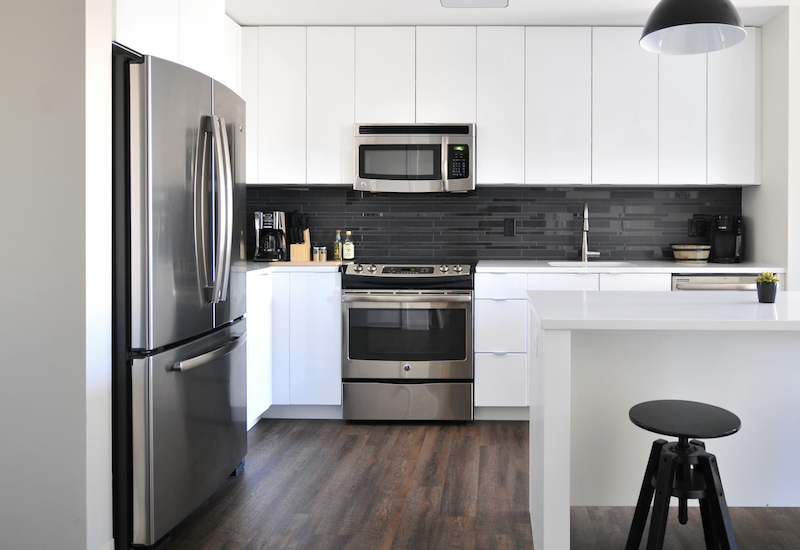
Extended-stay suite | Apartment-size or full-size refrigerator, microwave, cooktop or range, dishwasher where specified, ventilation, coffee maker, hospitality TV |
Allergy-friendly or wellness room | Standard room package plus a defined air-purification program and documented filter-maintenance process |
Cooktops, ranges, and dishwashers add electrical, ventilation, fire-safety, plumbing, cabinetry, and housekeeping considerations. They should be planned as part of the room design, not added as standalone purchases late in a renovation. The appliance package must also align with the requirements of the individual hotel flag.
How Should Hotels Choose Guest Room Appliances?
The right appliance package balances guest convenience with operational practicality. Before issuing a purchase order, hotels should evaluate the following:
Confirm Hotel Brand Standards First
Franchised hotels should verify current brand specifications, approved products, required finishes, room-type standards, and Property Improvement Plan (PIP) requirements before selecting equipment. Requirements can vary among flags within the same parent company and may change over time. Transworld’s guide to hotel technology brand standards provides additional context.
Choose Equipment Intended for the Application
Confirm that each product is suitable and warrantied for its intended hospitality or commercial installation. Compare expected usage, safety certifications, duty cycle, controls, service network, and availability of replacement parts. A lower purchase price provides little benefit if the product is difficult to service or not covered in a hotel environment.
Measure the Room and Verify Infrastructure
Check doorway and elevator access, appliance dimensions, cabinetry openings, door swing, required ventilation clearance, voltage, circuit capacity, plumbing, drainage, and mounting surfaces. For multi-room projects, field conditions should be verified before a full shipment arrives.
Evaluate Energy Use Across the Entire Property
A small difference in power consumption becomes more meaningful when multiplied across dozens or hundreds of rooms. Hotels should compare available efficiency data and estimate the operating impact at property scale. The U.S. Environmental Protection Agency’s ENERGY STAR checklist for hotels, motels, and inns recommends establishing a baseline and tracking property energy and water use so improvement opportunities can be identified.
Standardize Models Where Practical
Using a consistent model within each room type simplifies staff training, cleaning procedures, spare-parts inventory, troubleshooting, and replacement planning. Standardization can also improve visual consistency across the property.
Calculate Total Cost of Ownership
Purchase price is only one part of the investment. Energy use, consumables, installation, warranties, maintenance labor, filters, replacement parts, expected availability, and downtime all contribute to total cost of ownership. A slightly more expensive appliance may provide better value if it is easier to maintain and replace at scale.
Frequently Asked Questions About Hotel Room Appliances
What appliances are usually included in a hotel room?
Common hotel room appliances and devices include a hospitality TV, compact refrigerator, coffee maker, hair dryer, iron, safe, and charging station. Many hotels also provide microwaves, while extended-stay suites may include a full refrigerator, cooktop, range, dishwasher, or other kitchenette appliances.
Does every hotel room need a refrigerator and microwave?
No. The correct appliance package depends on the hotel segment, brand standard, room type, market, and guest profile. Compact refrigerators are common across many properties, while microwaves are especially relevant to select-service, family-oriented, and extended-stay hotels. Operators should confirm brand requirements before purchasing.
What is the difference between a hospitality appliance and a consumer appliance?
Hospitality appliances are selected for frequent guest use, simple operation, ease of cleaning, serviceability, and compatibility with hotel standards. The important distinction is not the label alone: hotels should verify that a product is suitable and warrantied for the intended commercial environment.
Should a hotel buy a mini refrigerator and microwave separately or as a combination unit?
Separate appliances provide more flexibility when one unit needs replacement. Combination units can conserve space, create a cleaner installation, and may simplify power management. The best choice depends on the room layout, electrical plan, brand requirement, service strategy, and replacement cost.
How often should hotel room appliances be replaced?
There is no single replacement schedule for every appliance. Hotels should use condition, performance, repair frequency, energy consumption, appearance, parts availability, warranty status, and brand requirements to guide replacement timing. Maintenance records can help identify when repeated repairs are becoming less economical than a planned upgrade.
What hotel appliances are most important for extended stays?
Extended-stay rooms typically benefit from a refrigerator with greater usable capacity, microwave, cooktop or range, coffee maker, and depending on the flag and room design, a dishwasher or other kitchen equipment. The goal is to give guests enough functionality to store food and prepare everyday meals safely and conveniently.
What should hotels check before ordering appliances in bulk?
Hotels should confirm brand approval, exact model numbers, quantities by room type, dimensions, finishes, voltage, circuit capacity, ventilation, plumbing, lead times, warranty terms, delivery sequencing, storage, installation responsibilities, and spare-unit requirements. A room-by-room equipment schedule can prevent costly mismatches.
Build a Hotel Appliance Package Around the Property, not a Generic Checklist
Modern hotel room appliances should make a stay easier without creating unnecessary complexity for hotel staff. The strongest appliance package is not necessarily the one with the most devices. It is the one that fits the property’s guests, physical rooms, operating model, brand standards, and long-term maintenance capabilities.
Transworld helps hotel owners, operators, developers, and purchasing teams compare hospitality appliances for renovations, new construction, PIPs, and extended-stay projects. Explore Transworld’s hotel and hospitality appliances or contact the hospitality technology team to discuss product selection, project quantities, distribution, and installation requirements.