In today’s hospitality landscape, guest expectations are evolving rapidly. Travelers want more than just a comfortable room, they expect a seamless, modern, and visually engaging experience from the moment they arrive. One of the most effective ways hotels are meeting these expectations is through digital signage.
From immersive video walls to informative lobby displays and high-visibility outdoor screens, digital signage and commercial displays are a core part of how hotels communicate, market, and operate. When deployed strategically, it does far more than enhance aesthetics, it improves the guest experience, streamlines operations, and drives incremental revenue across the property.
At its foundation, digital signage refers to commercial-grade displays used to deliver dynamic content such as videos, promotions, schedules, and real-time updates. Unlike static signage, these systems can be updated instantly and managed remotely, allowing hotels to tailor messaging based on time of day, guest behavior, or special events. This flexibility is what makes digital signage such a powerful tool in hospitality environments.
Why Digital Signage Matters for Hotels
Digital signage is no longer just a “nice-to-have”, it’s a strategic investment that directly impacts both guest satisfaction and profitability. Hotels that adopt it effectively often see measurable improvements across multiple areas of the business.
Key benefits include:
Enhanced guest experience: Guests can quickly access directions, amenities, and updates without waiting at the front desk
Increased revenue opportunities: Targeted promotions encourage on-site spending (spa, dining, upgrades)
Operational efficiency: Automates repetitive guest inquiries and reduces staff workload
Real-time communication: Instantly update messaging across the property
When implemented correctly, digital signage becomes an extension of your service model, informing, guiding, and influencing guests throughout their stay.
Key Types of Digital Signage for Hospitality
1. Video Walls: High-Impact Visual Experiences
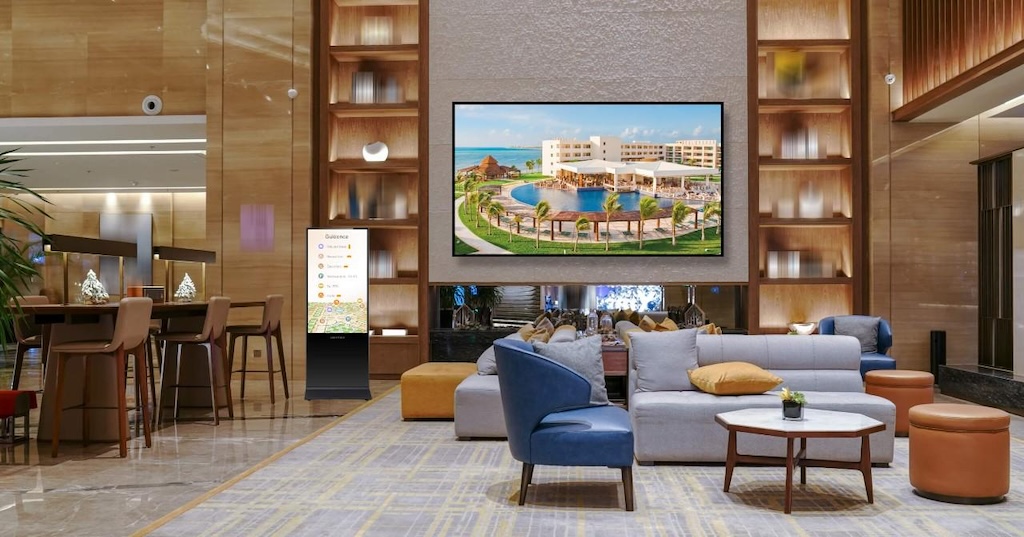
Video walls are one of the most visually striking forms of digital signage, combining multiple displays into a single large-format screen. They are designed to capture attention immediately and create a strong first impression in high-traffic areas.
In hospitality settings, video walls are commonly used in lobbies, lounges, and event spaces to showcase brand visuals, highlight amenities, or create immersive ambient environments. Their scale and clarity make them ideal for storytelling and elevating the overall atmosphere of a property.
Best use cases:
Lobby centerpiece displays
Conference and event spaces
Bars, lounges, and entertainment areas
Key advantages:
Creates a memorable first impression
Enhances branding and ambiance
Captures attention in large spaces
2. Lobby Displays: The Digital Concierge
Lobby displays are the backbone of most hotel signage strategies. Positioned in high-traffic areas, they provide essential information while also enhancing the guest experience.
These displays often function as a digital concierge, offering wayfinding, event schedules, weather updates, and local recommendations. In many cases, they also include interactive features that allow guests to navigate the property or explore services independently.
Common applications:
Wayfinding and property navigation
Event and conference schedules
Local attractions and recommendations
Self-service check-in or information kiosks
Key advantages:
Improves first impressions
Reduces front desk congestion
Provides real-time, accessible information
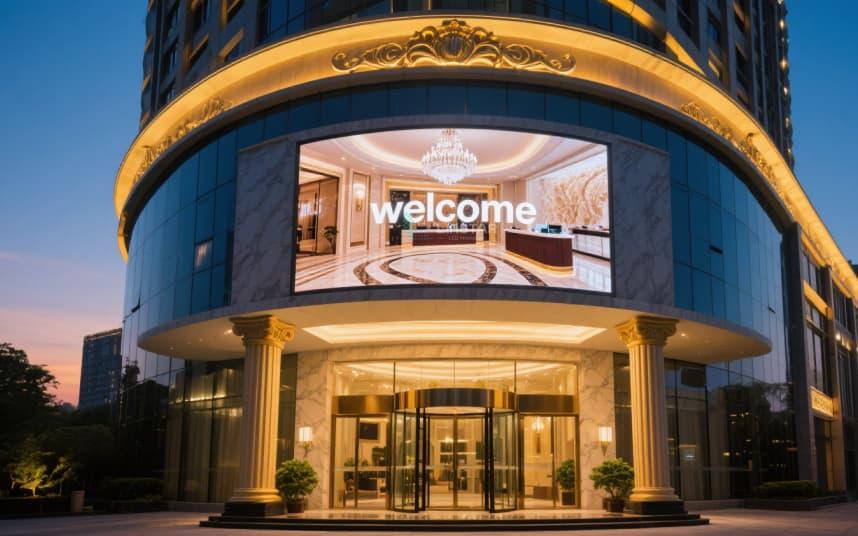
3. Outdoor Displays: Extending Your Reach
Outdoor digital signage allows hotels to communicate beyond their interior spaces, capturing attention before guests even step inside.
Built for durability and high brightness, these displays remain visible in direct sunlight and harsh weather conditions. They are especially valuable for properties located in high-traffic areas or destination markets.
Common applications:
Entrance signage and welcome messaging
Promotions and event advertising
Wayfinding for parking and amenities
Highlighting on-site dining or experiences
Key advantages:
Increases foot traffic and visibility
Strengthens brand presence
Delivers 24/7 promotional opportunities
Where Digital Signage Delivers the Most Value
The effectiveness of digital signage depends heavily on placement. The most successful installations focus on high-traffic and high-dwell areas, locations where guests naturally pause and engage.
Key locations include:
Lobby and reception areas
Elevator banks and waiting areas
Corridors and guest floors
Conference and event spaces
Restaurants, bars, and lounges
Outdoor entrances and parking areas
Placing displays at these “decision points” ensures that your messaging reaches guests at the moments when they are most likely to act.
Hotel Business Report: Digital Signage Is Significant... and Underutilized
Recent industry research highlights just how significant, and underutilized, digital signage has become in hospitality. According to a 2026 Hotel Business survey report , 78% of hotels either don’t fully monetize their digital signage or lack the strategy to do so, even as 40% regularly receive advertising or sponsorship requests they can’t fulfill. This gap points to a major untapped revenue opportunity, particularly in event-driven properties where signage can support branded content and real-time promotions.
At the same time, guest sentiment remains strong, with nearly 65% of travelers saying digital signage improves their stay experience, reinforcing its dual role as both a service enhancement and a profit driver. Case studies further demonstrate the upside: one major convention hotel saw a 73% increase in brand-related sales revenue and reduced ROI timelines from 18 months to under five months after implementing a comprehensive signage strategy.
To maximize results, top-performing hotels are shifting their approach, treating digital signage not just as a communication tool, but as a managed revenue channel powered by strategic placement, targeted content, and, increasingly, revenue-share partnerships that align incentives and unlock ongoing advertising income.
Key Features to Look for When Buying Digital Signage
Choosing the right digital signage solution requires more than just selecting a screen. Hotels should evaluate both hardware and software capabilities to ensure long-term performance and scalability.
Important factors to consider:
Commercial-grade displays: Designed for 16/7 or 24/7 operation with higher durability
Content Management System (CMS): Centralized control for updating and scheduling content
Brightness levels:
Indoor: 300 - 700 nits
Outdoor: 2,000+ nits
Interactivity: Touchscreens for self-service and engagement
Scalability: Ability to expand across multiple locations and displays
Investing in the right infrastructure upfront ensures reliability and reduces ongoing maintenance costs.
Digital Signage Content Strategy: What Works Best?
Even the most advanced display technology won’t deliver results without the right content strategy. Successful hotels focus on content that is both useful and timely, rather than overly promotional.
High-performing content includes:
Wayfinding and maps
Real-time updates (weather, events, travel info)
Amenity promotions aligned with guest behavior
Local experiences and recommendations
Timing plays a critical role in engagement. For example:
Morning: Breakfast and coffee promotions
Afternoon: Spa, pool, and activity offers
Evening: Dining, bar, and entertainment promotions
When content aligns with guest intent, it feels helpful rather than intrusive, and that’s when it drives results.
How Digital Signage Drives Revenue
Digital signage is not just an informational tool, it’s a powerful revenue driver when used strategically. By placing targeted messaging in high-visibility areas, hotels can influence guest decisions in real time.
Common revenue opportunities include:
Upselling premium services (spa treatments, room upgrades)
Promoting on-site dining and bar specials
Advertising events, conferences, and experiences
Highlighting limited-time offers
Because digital signage reaches guests at key decision points, it can significantly increase on-property spending without requiring additional staff interaction.
Choosing the Right Solution for Your Property
Every hotel has unique needs, and the ideal digital signage strategy will vary depending on property type, size, and target audience.
Boutique hotels: Focus on stylish lobby displays and brand storytelling
Resorts: Combine outdoor displays with immersive video walls
Business hotels: Prioritize wayfinding and conference signage
Luxury properties: Invest in high-end visuals and interactive experiences
In most cases, a layered approach delivers the strongest results. Combining lobby displays for functionality, video walls for impact, and outdoor displays for visibility creates a cohesive and effective signage ecosystem.
Digital Signage, Essential for Hospitality Businesses
Digital signage has rapidly evolved into an essential component of modern hospitality operations. It enhances how hotels communicate, how guests navigate spaces, and how services are promoted in real time.
Whether your goal is to improve guest satisfaction, streamline operations, or increase revenue, the right mix of video walls, lobby displays, and outdoor signage can transform your property into a more engaging and efficient environment.
As competition continues to grow and guest expectations rise, hotels that invest in digital signage today will be better positioned to stand out, and succeed, tomorrow.
Why Buy Digital Signage from Transworld?
Choosing the right digital signage is only part of the challenge, the partner you work with is just as important. TWS Transworld provides more than just products; we deliver complete solutions tailored to your property.
Our team helps with:
System design and planning
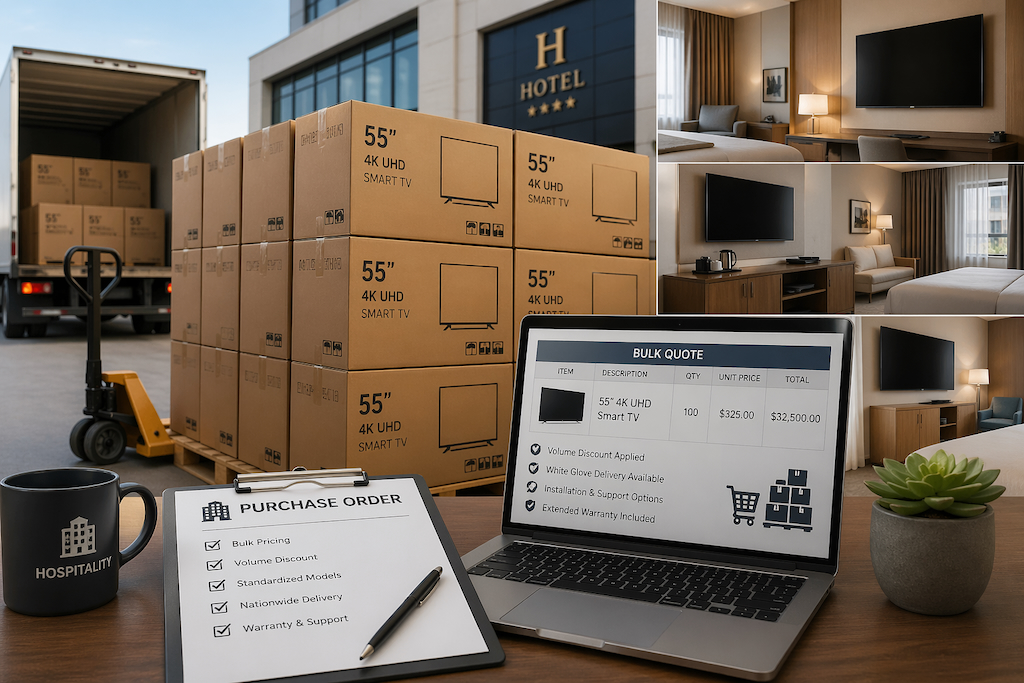
Volume pricing and procurement
Brand selection (Samsung, LG, Philips)
Installation support and logistics
By leveraging our industry expertise and buying power, we ensure you get the most competitive pricing and the right solution for your needs.
Have questions or need a quote? Contact us today to get started.